What Is Reformer Pilates?
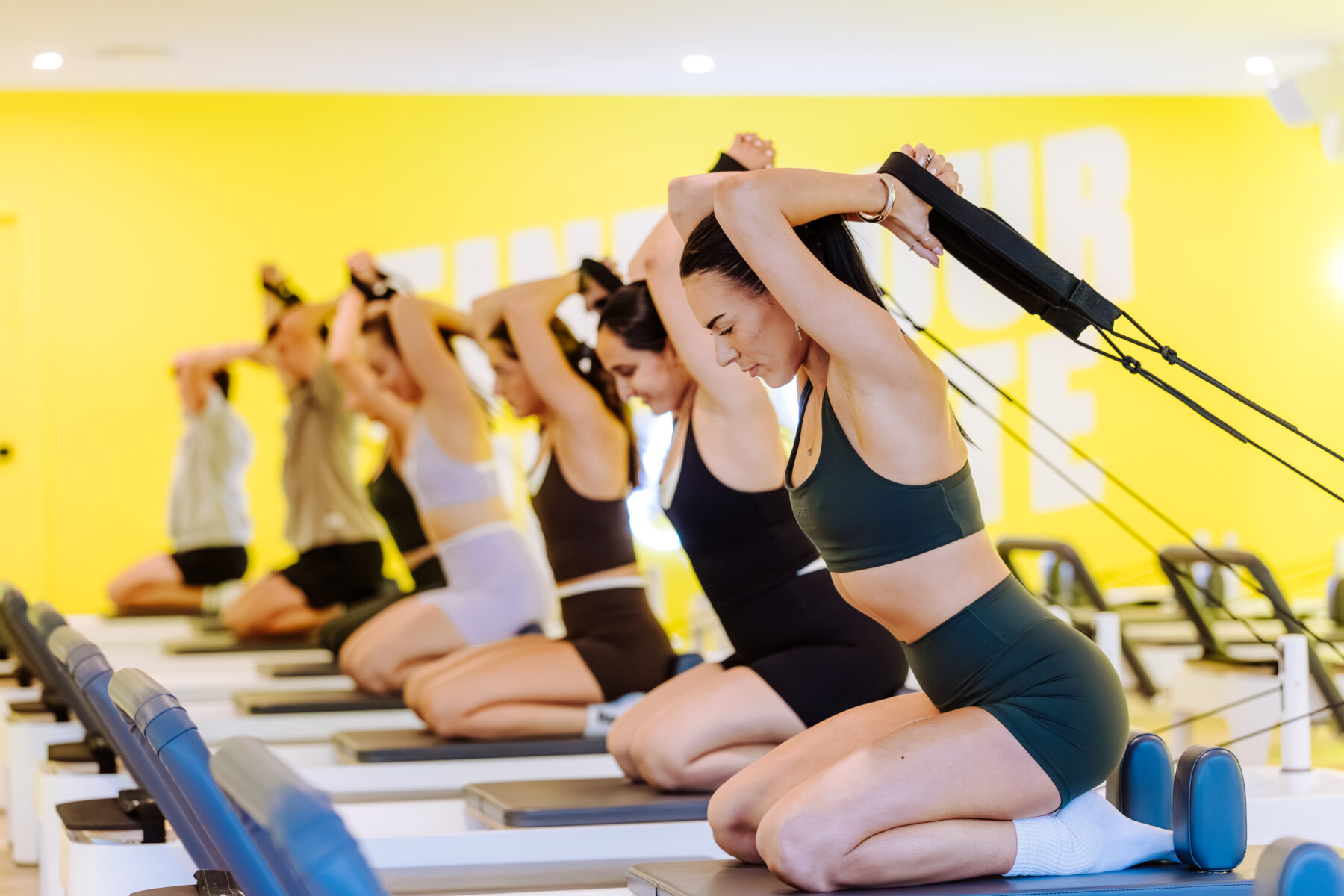
If you’ve never tried Reformer Pilates before, the machine can look a little intimidating… but it’s actually designed to help you move better, not make things harder. A reformer is a sliding carriage that moves along a frame using adjustable springs for resistance. Those springs can add challenge to an exercise, but they can also support your body, making movements more controlled, comfortable, and accessible for every fitness level.
That means whether you’re building strength, improving flexibility, recovering from injury, or simply getting started with Pilates, the reformer adapts to you. Every movement is low-impact, easy on the joints, and designed to help you feel stronger, more balanced, and more confident with every class.
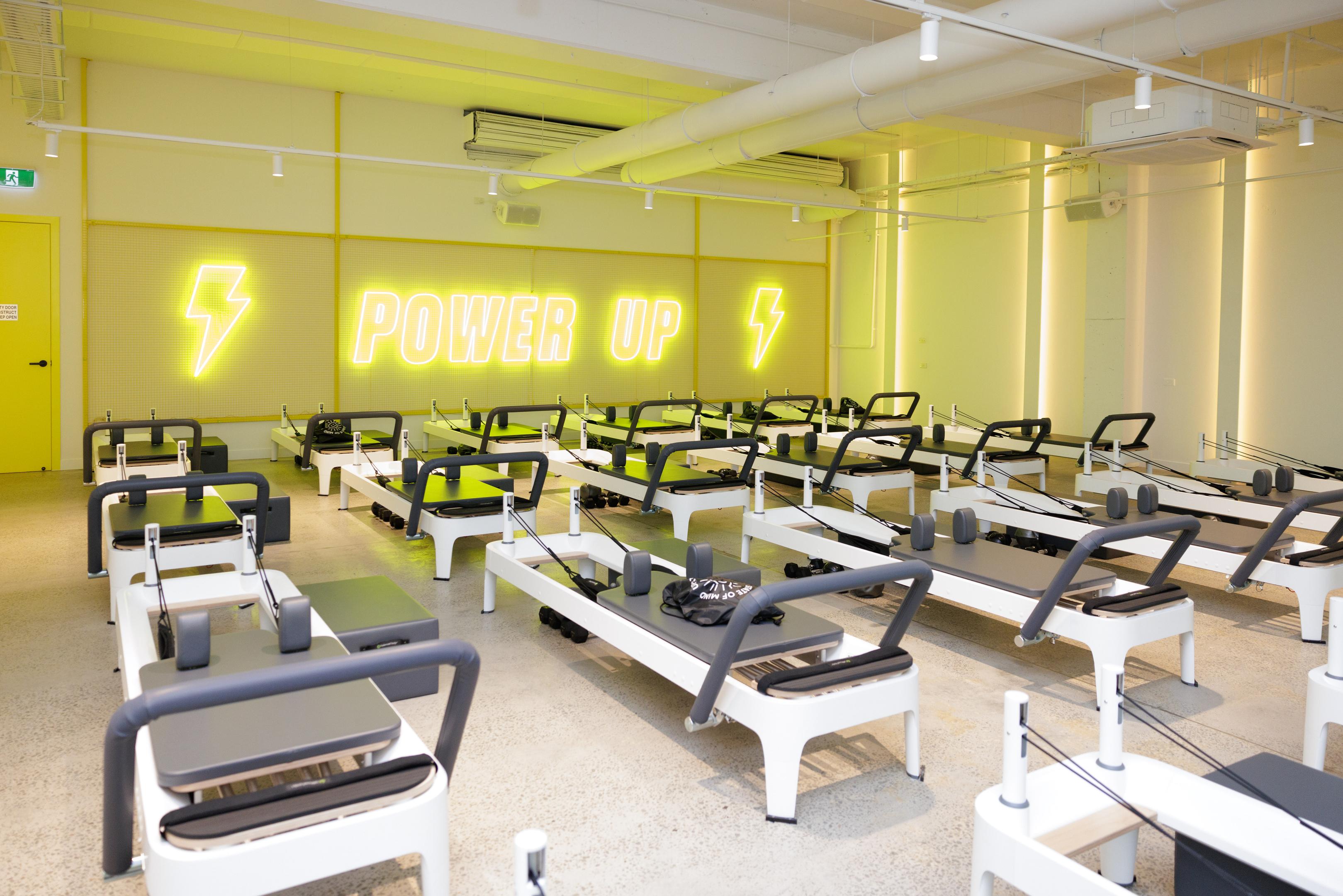
At Upstate Studios, our purpose-built reformer studios are welcoming, high-energy spaces where everyone feels comfortable from day one. Whether you’re joining us in Balaclava, Fitzroy, Palm Beach, or any other Upstate location, you’ll use the same premium reformer equipment and experience the same supportive coaching, motivating atmosphere, and feel-good community.
Is Reformer Pilates Good for Beginners? (Yes, and Here’s Why)
Absolutely. In fact, Reformer Pilates is one of the best ways to start your Pilates journey. While many people assume they need to master mat Pilates first, that’s actually a common misconception. The reformer’s spring system provides support as well as resistance, helping you move with better control, stability, and alignment from your very first class.
The reformer also gives you constant feedback. Because the carriage responds to every movement, it’s easier to understand how your body should be working, especially when it comes to activating your core. Combined with guidance from your instructor, this makes it easier to learn proper technique than many people expect.
Another reason beginners love Reformer Pilates is that it’s low-impact and gentle on the joints while still delivering a challenging full-body workout. Every exercise can be adjusted by changing the spring resistance or offering different movement options, so you can work at a level that feels right for you as your strength and confidence build.
So, do you need to do mat Pilates before trying a reformer? Not at all. While understanding the basics of breathing and core engagement can be helpful, it’s not a requirement. At Upstate Studios, our instructors guide you through every class, offering modifications, coaching, and encouragement so you can feel comfortable from your very first session.
Benefits of Reformer Pilates for Beginners
One of the first things beginners notice is improved core strength. Reformer Pilates teaches you how to engage your deep core muscles during every movement, helping you build strength that carries over into everyday life, from lifting groceries to sitting comfortably at your desk and improving your overall balance.
You’ll also start to notice better posture. Hours spent sitting at a desk or looking down at your phone can leave you feeling stiff and rounded through the shoulders. Reformer Pilates strengthens the muscles that support good posture while improving mobility, helping you stand taller and move more comfortably after just a few sessions.
For many beginners, especially those with desk jobs, Reformer Pilates can also help reduce lower back tension. By strengthening your core, improving hip mobility, and encouraging better movement patterns, your body learns to share the workload more efficiently instead of placing unnecessary strain on your lower back.
Another major benefit is that it’s a joint-friendly way to build strength. The spring resistance provides a challenge without the heavy impact of traditional weight training, making it suitable for a wide range of ages and fitness levels while still delivering an effective full-body workout.
Finally, Reformer Pilates helps develop body awareness, something many people don’t realise they’re missing. You’ll learn how to recognise which muscles should be working during each exercise, improving your technique, coordination, and confidence every time you step into the studio.
At Upstate Studios, every class is just 45 minutes, making it easy to fit into a busy schedule. You’ll get a challenging, full-body workout that’s efficient, effective, and leaves you feeling stronger, more energised, and ready to take on the rest of your day.
What to Expect in Your First Reformer Pilates Class at Upstate
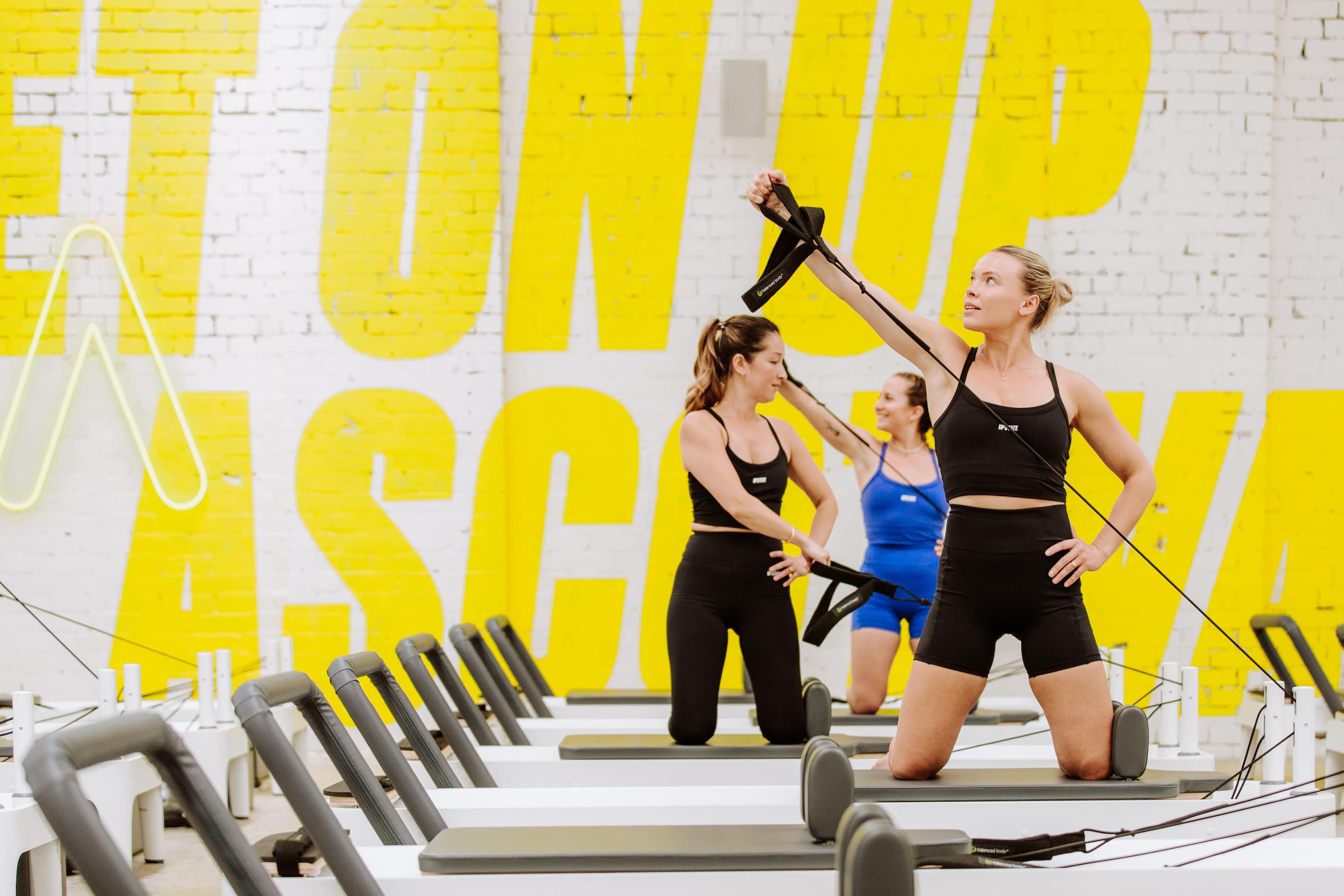
Your first class starts before you even step into the studio. Once you’ve booked your session, we recommend arriving around 10 minutes early. This gives you time to check in, meet your instructor, and let them know it’s your first Reformer Pilates class. From there, they’ll show you the basics of the reformer, including how to adjust the footbar, change the springs, and use the straps, so you feel confident before class begins. Here’s 10 things you should know before your first class.
As the class gets underway, you’ll start with a gentle warm-up to wake up your muscles and introduce the movements you’ll be using throughout the session. From there, you’ll move through a series of full-body exercises designed to build strength, improve mobility, and challenge your balance and coordination. Your instructor will demonstrate each exercise, provide clear cues, and offer modifications or spring adjustments to suit your experience level. Every class finishes with a cool-down and stretch, leaving you feeling stronger, more mobile, and ready to take on the rest of your day.
If you’re worried that everyone else will know exactly what they’re doing, you’re not alone, it’s one of the most common concerns we hear from first-timers. The reality is that some people may know the flow of the class a little better, but everyone started somewhere, and nobody is paying attention to what you’re doing. Everyone is focused on their own workout, not yours.
At Upstate Studios, we’ve deliberately designed every class to be encouraging for newcomers. As Upstate founder Kristian Goranovski shared with the Geelong Advertiser, “We wanted to create a space where people feel encouraged, not intimidated.” That philosophy is at the heart of every Upstate studio. Our instructors are there to coach, support, and celebrate your progress, whether it’s your first class or your five hundredth.
If you’re unsure which class to book, Power Reformer Form is the perfect place to start. This beginner-friendly class includes extra time for technique, set-up, and alignment, helping you build confidence with the reformer before progressing into faster-paced formats like Power Reformer, Power Reformer Strength, or Power Reformer Burn. Wherever you begin, you’ll be supported every step of the way.
Common Beginner Reformer Exercises (and What They Target)
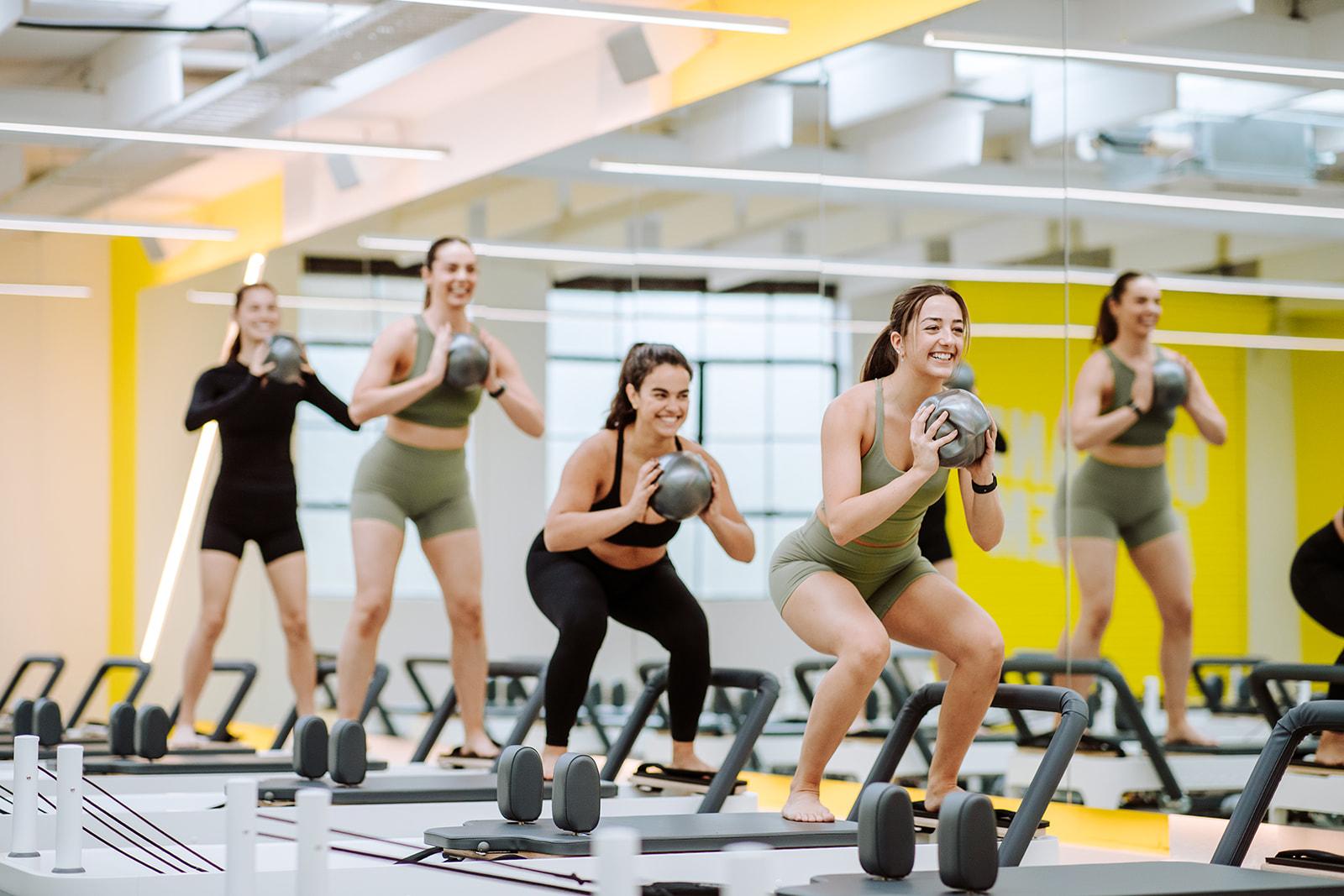
Your first Reformer Pilates class will introduce you to a range of foundational movements designed to build strength, stability, and confidence on the machine. While the exercises may look simple, the focus is on controlled movement, correct alignment, and understanding how your body should feel during each exercise.
Footwork
Footwork is often one of the first exercises beginners learn. You’ll lie on your back with your feet placed on the footbar, pressing the carriage away and returning with control. This movement targets your quadriceps, hamstrings, glutes, calves, and deep core muscles while teaching you how to create strength through your legs.
Beginner tip: Focus on pushing evenly through your whole foot rather than just your toes or heels. You should feel this through your legs and glutes, not strain in your knees, if your lower back is lifting off the carriage, reduce your range of movement.
The Hundred
The Hundred is a classic Pilates exercise that involves holding your legs in position while pumping your arms and maintaining a strong core connection. It targets your deep abdominal muscles, improves breathing control, and builds endurance.
Beginner tip: The goal isn’t to move as fast as possible. You should feel this in your core, not your neck or shoulders. If your upper body feels tense, lower your legs or use a modification.
Leg Circles
Leg circles involve extending your legs into the straps and creating controlled circles through your hips. This exercise works your core, hip stabilisers, and inner and outer thighs while improving mobility and coordination.
Beginner tip: Keep your hips heavy and stable on the carriage. You should feel the movement around your hips and core, not pulling through your lower back, make the circles smaller if your pelvis starts to move.
Pelvic Curl
Also known as a bridge, the Pelvic Curl involves lifting and lowering your spine one vertebra at a time while pressing through your feet. It targets your glutes, hamstrings, and core while teaching spinal mobility and control.
Beginner tip: Think about rolling your spine rather than lifting your hips as high as possible. You should feel this in your glutes and hamstrings, not your lower back; avoid over-arching at the top of the movement.
Long Stretch
The Long Stretch is a plank-style movement performed on the reformer, where you move the carriage while maintaining a strong body position. It challenges your core, shoulders, arms, and full-body stability.
Beginner tip: Prioritise your plank position over how far the carriage moves. You should feel this through your core and shoulders, not your lower back. Shorten your range if you lose control.
Short Box Series
The Short Box Series is performed seated on the reformer with your legs secured, using different movements such as rounded back, side bends, and twists. It targets your core, posture muscles, and spinal mobility.
Beginner tip: Keep your movement controlled and avoid using momentum. You should feel your abs working throughout the movement, not pulling through your hip flexors. Sit taller and reduce your range if needed.
Single Leg Stretch
Single Leg Stretch involves lying on your back and alternating your legs while maintaining core engagement. It targets your abdominals, hip flexors, and coordination while teaching you to stabilise your pelvis.
Beginner tip: Keep your lower back connected and move slowly. You should feel this in your lower abs, not your hip flexors. If your hips are doing all the work, reduce the range of your leg movement.
Reformer Pilates vs Mat Pilates: Which Is Better for Beginners?
Both Reformer Pilates and Mat Pilates are great ways to build strength, improve mobility, and develop body awareness, but they offer a different experience. Mat Pilates uses your own body weight as resistance and focuses on mastering foundational movements, making it an accessible and affordable option you can practise almost anywhere.
Reformer Pilates adds the element of the reformer machine, using adjustable springs to provide both support and resistance. This means the machine can help guide your movement while also challenging your muscles, making it easier for beginners to understand correct form and feel which muscles should be working. The added feedback from the carriage, straps, and springs can help you build confidence faster with the guidance of an instructor.
Neither option is objectively “better”, it comes down to your goals. If you’re looking for a simple introduction to Pilates, improved body awareness, and a practice you can do anywhere, mat Pilates is a great place to start. If you want a full-body workout with more equipment support, instructor guidance, and the ability to adjust every movement to your level, Reformer Pilates can be a great starting point.
At Upstate Studios, you don’t have to choose just one. Our 30 Day Intro Offer gives you the chance to experience different class styles, try both Reformer and Mat Pilates, and discover what feels best for your body and your goals.
Beginner Mistakes to Avoid on the Reformer
Starting something new can feel challenging, and Reformer Pilates is no different. The good news? Most beginner mistakes are easy to fix, and your instructor is there to guide you through every adjustment. Here are a few common things to look out for in your first classes so you can feel more confident on the reformer.
Holding Your Breath During Harder Movements
It’s common to tense up and hold your breath when an exercise feels challenging, but breathing is a key part of Pilates. Instead, focus on steady inhales and controlled exhales to help engage your core, stay relaxed, and move with more control.
Letting the Carriage Slam Back
The reformer is designed for controlled movement, not speed. Instead of allowing the carriage to snap back after each exercise, focus on resisting the springs and controlling the return—this is where a lot of the strength is built.
Setting the Footbar Without Checking
The footbar position can change how comfortable and effective an exercise feels, especially for beginners. Rather than guessing, ask your instructor to help you find the right setup for your body and remember that small adjustments can make a big difference.
Gripping the Straps Instead of Using Control
When using the straps, beginners often grip tightly with their hands and shoulders instead of letting their core and arms guide the movement. Think about creating controlled tension through your whole arm rather than pulling or yanking the straps.
Assuming the Springs Stay the Same All Class
The springs aren’t a “one size fits all” setting and can (and should) change depending on the exercise, your strength, and your comfort level. If something feels too heavy or too light, ask your instructor for a spring adjustment; there’s no right or wrong setting.
Trying to Match the Person Next to You
It’s easy to compare yourself to someone who looks like they’ve done hundreds of classes, but everyone’s body, experience, and range of movement are different. Focus on your own form, listen to your instructor, and work at a level that feels challenging but controlled.
The biggest thing to remember? Your first Reformer Pilates class is about learning, not being perfect. At Upstate Studios, our instructors are there to help you understand the equipment, build confidence, and make every movement work for your body.
How Often Should Beginners Do Reformer Pilates?
For most beginners, 2–3 Reformer Pilates classes per week is the ideal balance of building strength, improving technique, and allowing your body time to recover. Reformer Pilates isn’t just about building muscle; it also requires learning new movement patterns, coordination, and body awareness. Your nervous system needs time between sessions to absorb and improve these skills, which is why consistency matters more than doing as many classes as possible.
A common beginner mistake is trying to do a class every day in the first week. While the motivation is amazing, jumping in too quickly can lead to excessive soreness, fatigue, and frustration if movements don’t feel natural straight away. Giving your body time to recover helps you come back stronger and more confident each session.
For someone completely new to Reformer Pilates, a great starting point is three classes in your first week, followed by two classes per week for the next month. This gives you enough repetition to build familiarity with the reformer while still allowing your body to adapt.
At Upstate Studios, our 30 Day Intro Offer is designed perfectly around building this kind of consistency. With access to our welcoming Reformer, Mat, Boxing, and Yoga classes, you’ll have the opportunity to create a routine, learn the foundations, and experience the benefits of moving regularly with the support of our instructors and community.
What to Wear and Bring to Your First Reformer Class
Getting ready for your first Reformer Pilates class is simple. The most important thing to bring is a pair of grip socks. They help create traction on the reformer, keeping you stable and secure during movements while also supporting hygiene in the studio. If you don’t have a pair yet, our Upstate Studios locations have grip socks available to purchase.
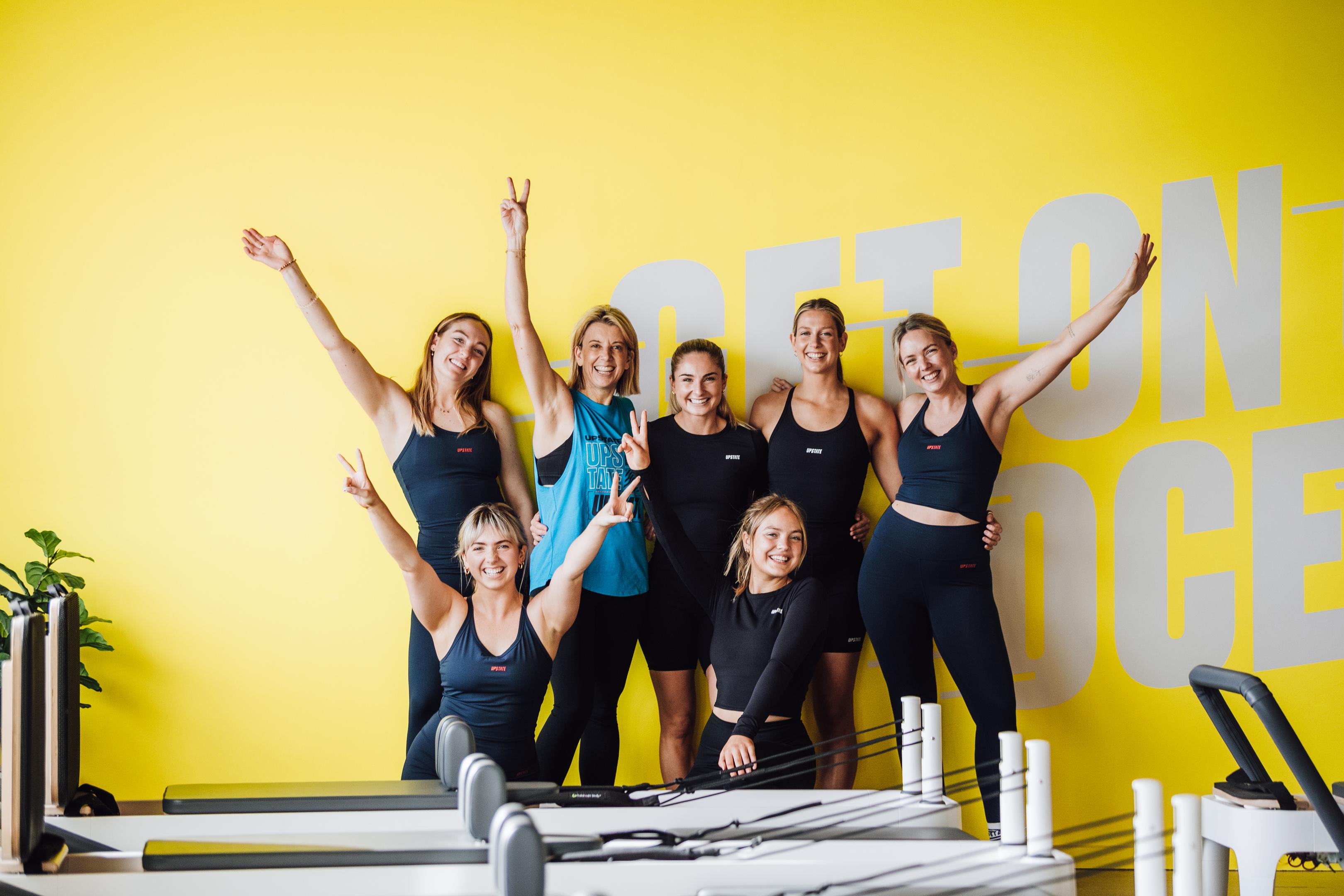
For what to wear, choose comfortable, form-fitting activewear that allows you to move freely while letting your instructor see your alignment and provide helpful technique cues. Think leggings, bike shorts, fitted tops, and layers you feel confident moving in. We recommend tying your hair back so it stays out of your face during class and bringing a water bottle to stay hydrated.
A few things to leave at home: shoes aren’t needed for Reformer Pilates, loose tops can become uncomfortable (especially during exercises where you’re lying down or moving upside down), and we recommend avoiding strong perfumes as our studios are shared spaces.
Need to head straight to or from work? We’ve got you covered. Upstate studios are equipped with change rooms, towels, and hair tools, making it easy to fit your workout into your day, whether you’re squeezing in a class before work, during your lunch break, or after hours.
Interlinks:
Ready to Try Reformer Pilates at Upstate?
Ready to experience Reformer Pilates for yourself? Start your Upstate journey with our 30 Day Unlimited Intro Offer for just $59 and enjoy unlimited access to our Reformer, Mat, Boxing, and Yoga classes!
With all-studios access, you can find the class, instructor, and location that work best for you. Whether you’re joining us in QLD, VIC, or NSW. Explore our Studio Locations and timetables to book your first class and discover why so many people make Upstate part of their weekly routine.
FAQs
Can a complete beginner start with Reformer Pilates, or do I need to do mat first?
Yes, complete beginners can start with Reformer Pilates. You don’t need to do mat Pilates first. The reformer’s spring system provides both support and resistance, helping you learn correct technique, build confidence, and understand how your body should move. Knowing the basics of breathing and core engagement can be helpful, but your instructor will guide you through everything you need to know in your first class.
What is Reformer Pilates good for as a beginner?
Reformer Pilates is a great way for beginners to build full-body strength, improve posture, increase mobility, and develop better body awareness. The machine provides feedback and support, making it easier to learn movements with control while still creating a challenging workout. Many beginners love that it’s low-impact, joint-friendly, and adaptable to different fitness levels.
Is Reformer Pilates safe for people with back pain?
Reformer Pilates can be a great option for people experiencing back discomfort as it focuses on strengthening the core, improving mobility, and creating better movement patterns. However, everyone’s body is different, so if you have an existing injury or ongoing back pain, we recommend speaking with a healthcare professional before starting and letting your Upstate instructor know before class so they can provide suitable modifications.
How long does it take to see results from Reformer Pilates?
Many beginners notice improvements in how they feel—such as better posture, increased body awareness, and improved mobility—within the first few weeks of consistent classes. Physical changes like increased strength and muscle tone come with regular practice, with many people seeing noticeable progress when attending around 2–3 classes per week.
How does the Reformer machine work?
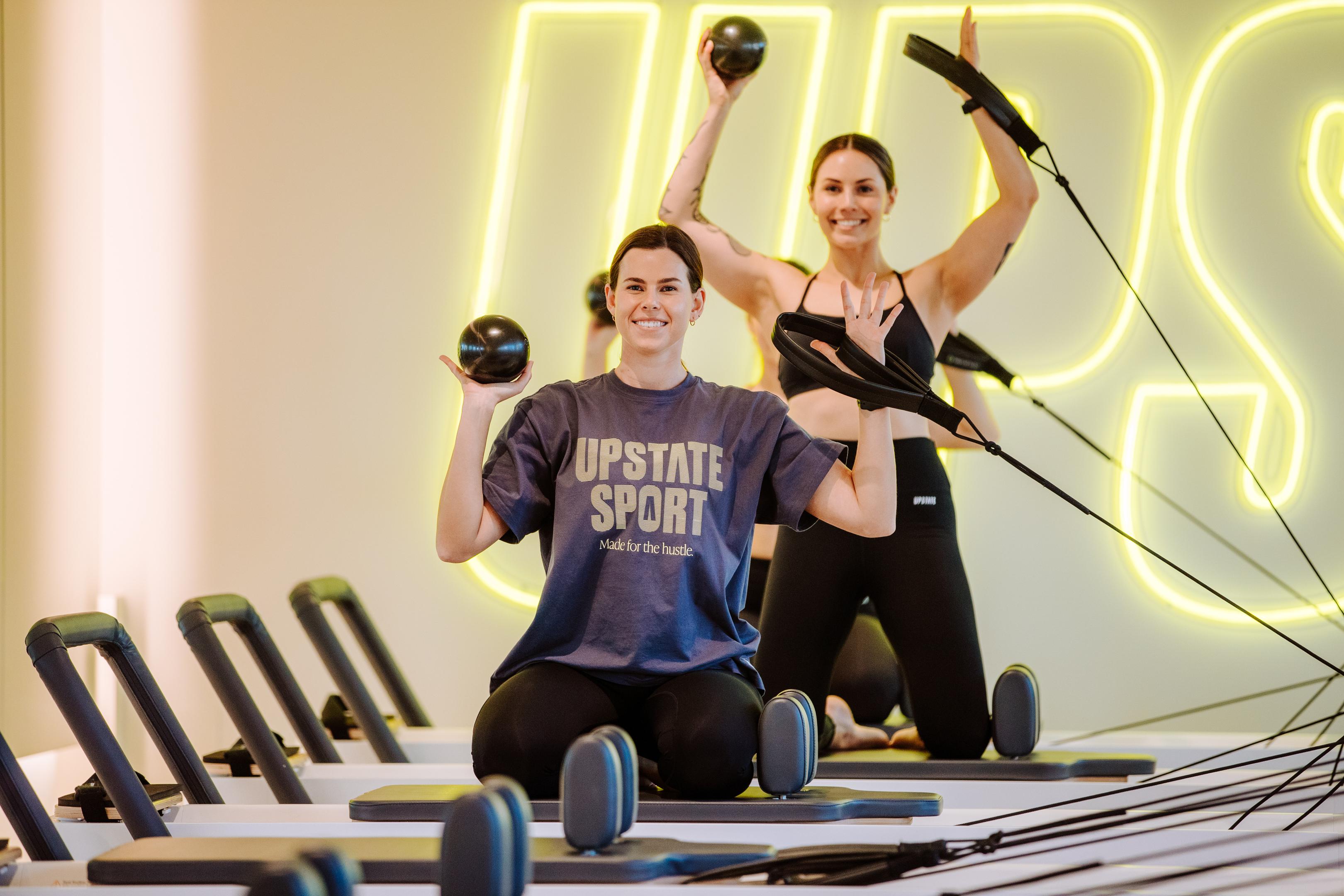
A Reformer is a Pilates machine made up of a sliding carriage, springs, straps, and a footbar. The springs create adjustable resistance that can challenge your muscles or assist your movement, making exercises more accessible while helping you build strength, stability, and control.
How do I deal with soreness after my first Reformer class?
It’s completely normal to feel some muscle soreness after your first Reformer Pilates class, especially if your body is using muscles in new ways. The best approach is to stay moving with gentle activity, drink plenty of water, prioritise recovery, and return to class when you feel ready. Consistency helps your body adapt, and you’ll usually find each session feels more familiar and comfortable as your strength builds.