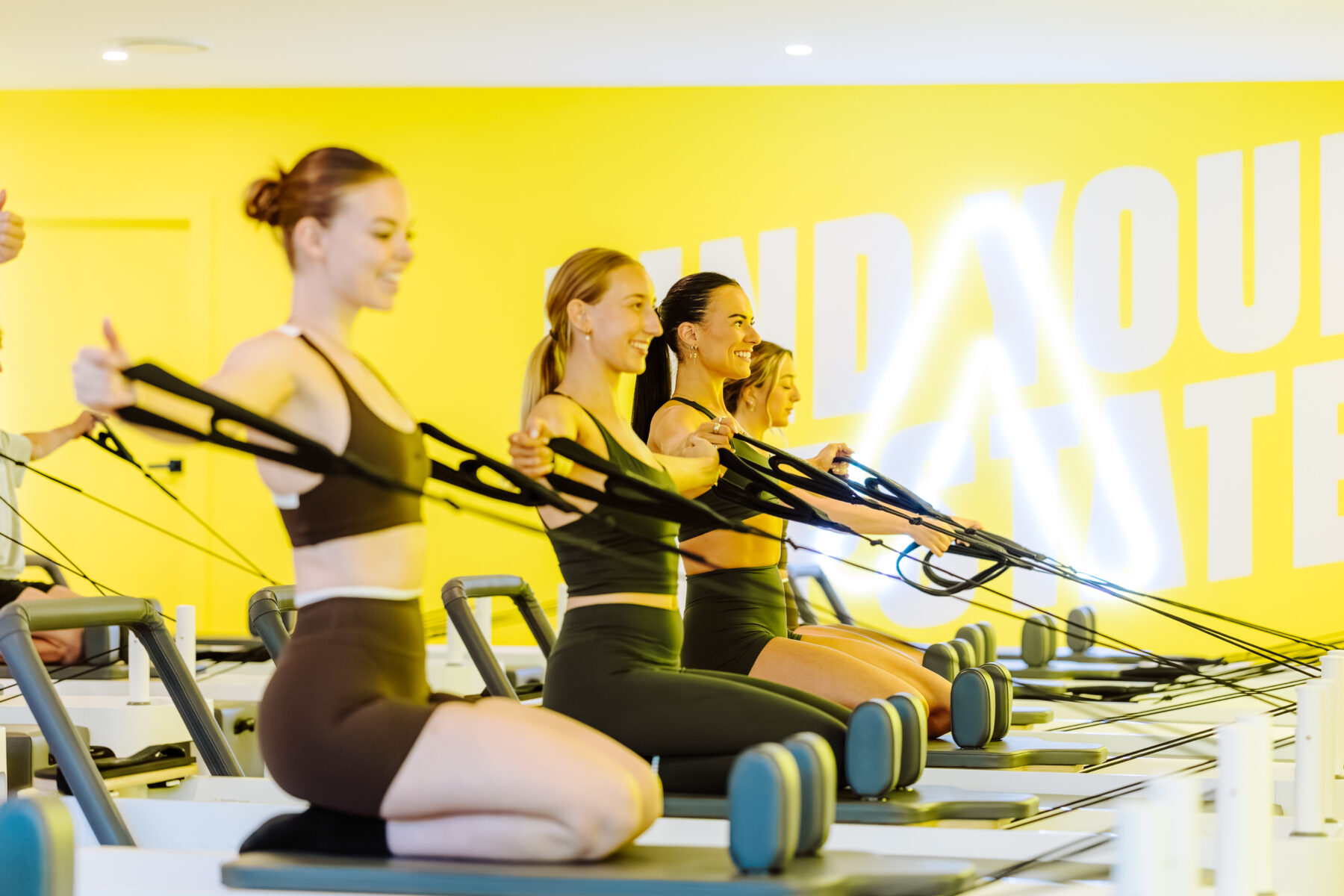
If you’ve ever found yourself wondering whether mat Pilates or reformer Pilates is “better”, you’re definitely not alone. Both styles deliver incredible benefits for your body and mind, but the right choice really comes down to your goals, experience level, and the kind of movement you genuinely enjoy coming back to. 💛
At Upstate, we believe Pilates should feel empowering, energising, and accessible no matter where you’re starting from. Whether you love the simplicity of a mat class or the full-body burn of the reformer, both methods are designed to help you move better, feel stronger, and reconnect with your body.
So… what’s the difference between mat and reformer Pilates, and which one is right for you? Let’s break it down. 👇
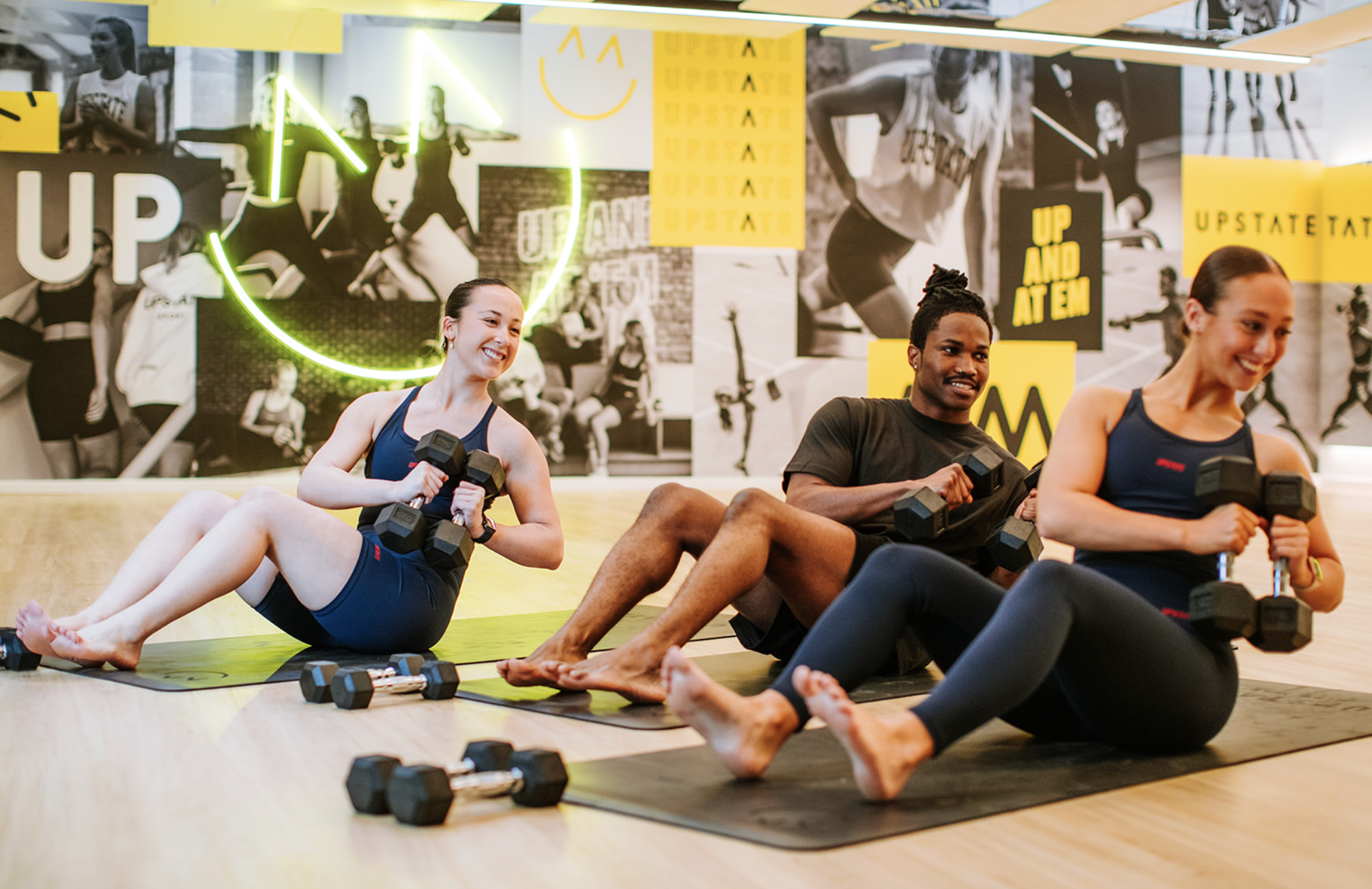
What Is Mat Pilates? 🧘♀️
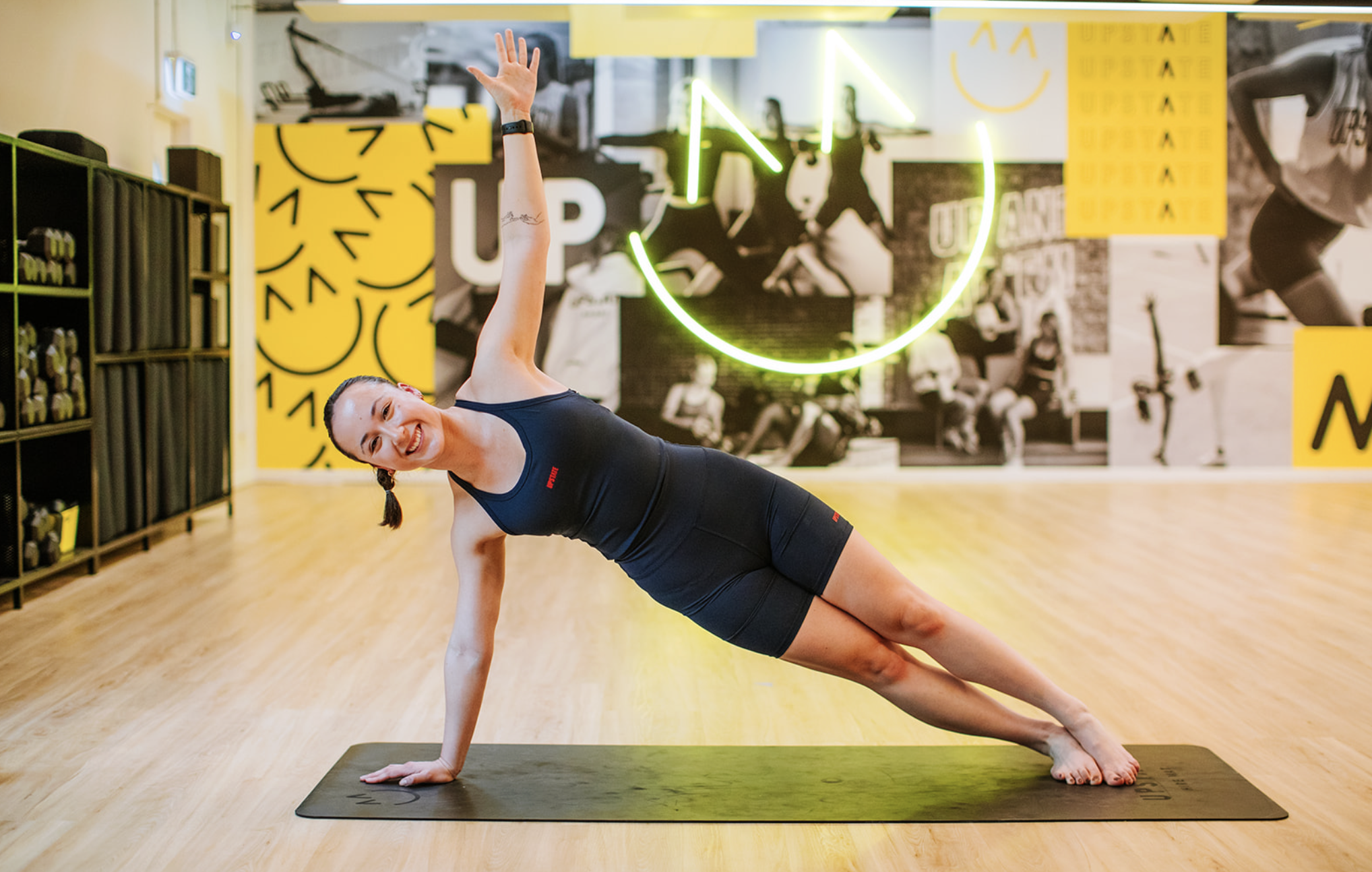
Mat Pilates is the original foundation of the Pilates method, created by Joseph Pilates in the early 1900s. Performed on the floor using your own bodyweight (and sometimes small props like bands, balls or light weights), mat Pilates focuses on controlled movement, core strength, alignment and breathwork.
Unlike reformer Pilates, mat Pilates doesn’t rely on large equipment, which makes it one of the most accessible and versatile ways to move your body. All you really need is a mat and enough space to stretch out.
At its core, mat Pilates teaches the fundamentals of movement:
- breath control
- posture and alignment
- deep core activation
- stability and coordination
- mindful movement patterns
It’s simple, effective and seriously powerful. 🔥
How Mat Pilates Works
Mat Pilates classes are built around slow, controlled and intentional movement patterns designed to strengthen the body from the inside out. It’s a low-impact exercise performed on the floor using your own body weight, and it reflects the core principles behind many pilates workouts. A typical pilates routine incorporates controlled movements to build strength, stability and body awareness.
You’ll often hear cues around:
- engaging your core for better muscle engagement
- maintaining neutral spine
- articulating through the spine
- finding your “C-curve”
- using precise movements with control rather than momentum to improve movement quality
Classes usually flow through a sequence of exercises that form the foundation of the Pilates method, including classic mat work, while targeting:
- abdominals and deep core muscles
- glutes and hips
- back and posture muscles
- arms and shoulders
- mobility and flexibility
Some mat classes are slower and technique-focused, while others can slot easily into a broader workout routine. Unlike reformer Pilates, mat Pilates requires only a simple mat and enough space. Expect shakes, sweat and that signature Pilates burn. ✨
Benefits of Mat Pilates
Mat Pilates may look simple — but don’t be fooled. Your body works hard without relying on external resistance.
Some of the biggest benefits include:
- improved core strength and stability
- better posture and spinal support
- increased mobility and flexibility
- enhanced balance and coordination
- stronger mind-body connection
- improved muscular endurance
- reduced tension through the neck and lower back
One of the best things about mat Pilates is how adaptable it is. Whether you’re a complete beginner or an advanced mover, exercises can be modified or progressed to suit your level.
Who Mat Pilates Is Best For
Mat Pilates is perfect if you:
- Want an affordable way to start Pilates
- Prefer working out at home or while travelling
- Are building foundational strength and technique
- Love simple, equipment-free movement
- Want to improve body awareness and core control
It’s also an amazing complement to strength training, running, reformer Pilates or high-intensity workouts.
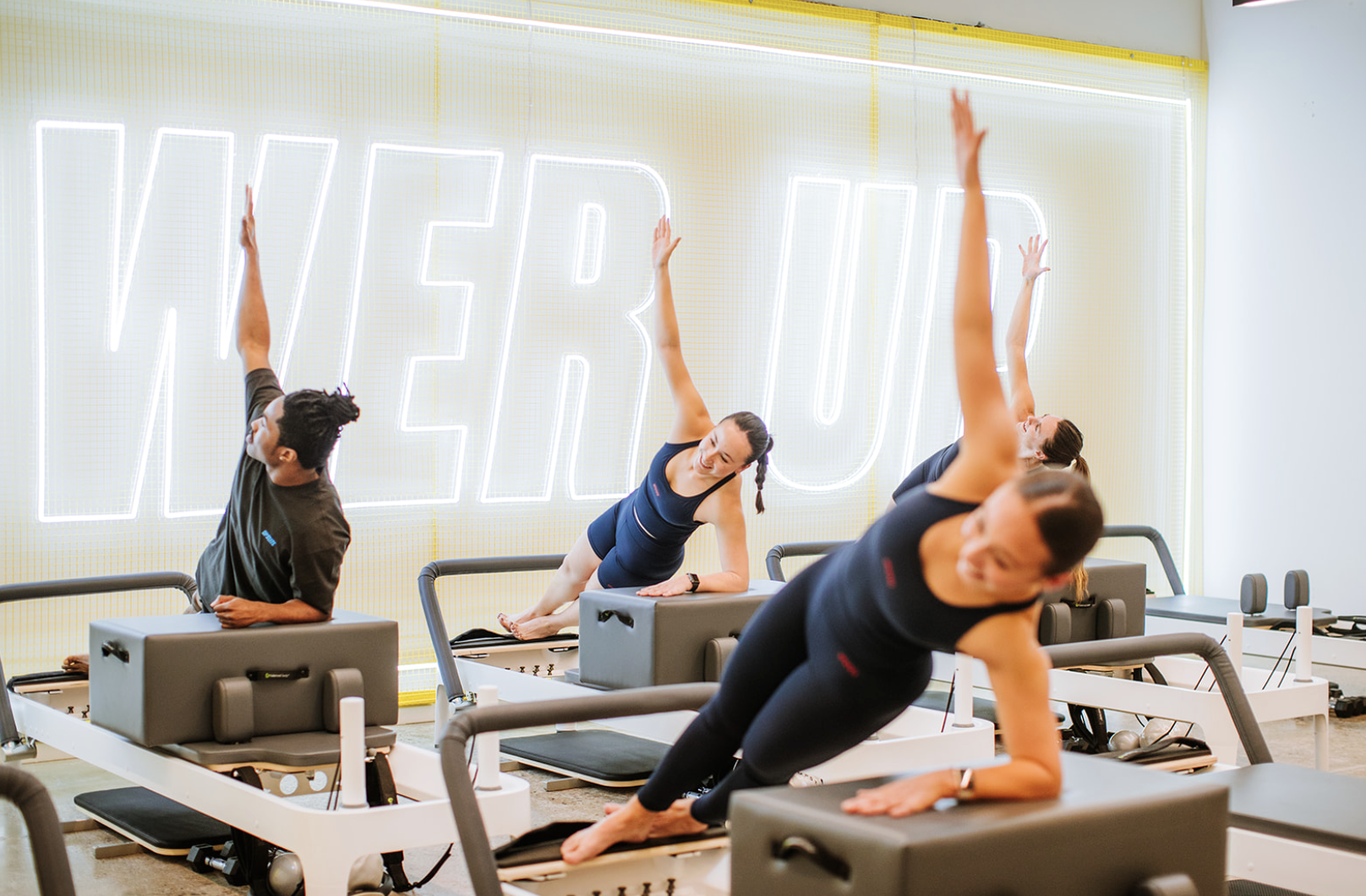
What Is Reformer Pilates? ✨
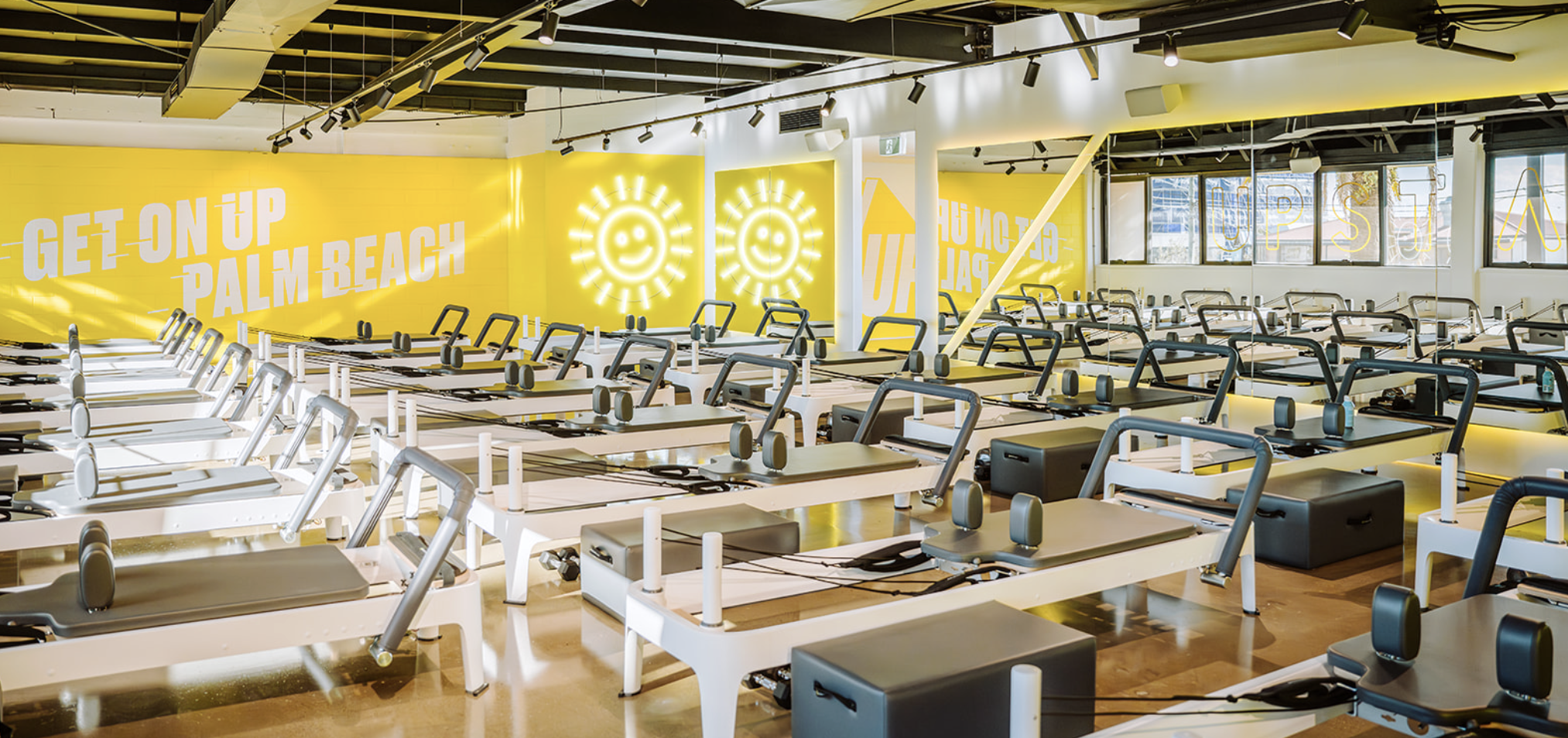
Reformer Pilates uses a specialised machine called a reformer, with a sliding carriage or sliding platform attached to springs, ropes and pulleys that create adjustable resistance and support.
At first glance, the reformer can look a little intimidating… but once you step onto the machine, it quickly becomes one of the most fun, dynamic and effective ways to move your body. 💛
The reformer allows for an incredible range of exercises performed lying down, kneeling, standing, sitting and even balancing on the moving carriage.
Because the springs can both support and challenge your body, reformer Pilates delivers a full-body, low-impact workout that feels strong, controlled and deeply effective.
Mat Pilates, meanwhile, suits a wide range of fitness levels and is often considered more accessible for beginners due to its simplicity, making it a strong starting point in a fitness journey depending on personal preference, fitness goals and the practice that feels best for the individual.
How the Reformer Machine Works
The reformer is a specialised machine with a sliding platform and carriage that moves back and forth using springs, ropes, and pulleys, bringing resistance training into the workout.
Different spring settings allow instructors to:
- increase or decrease intensity
- support movement patterns
- target specific muscle groups
- create progressive overload safely
- adapt exercises for injuries or mobility limitations, helping clients perform exercises with more support during rehabilitation
Heavier springs generally increase resistance, while lighter springs demand more stability and control, and this is part of the variety the reformer machine offers.
This combination of resistance and instability is what makes reformer Pilates feel so unique, your muscles are constantly working to stabilise, control and lengthen through every movement.
Benefits of Reformer Pilates
Reformer Pilates is loved for its versatility and for using spring settings as resistance to add support or challenge, making it an effective workout with more targeted strength training through adjustable resistance.
Benefits include:
- full-body strength and toning for a full body workout
- improved posture, alignment, and overall body awareness
- increased flexibility and mobility
- low-impact joint-friendly training
- greater muscle endurance
- movement that improves balance and coordination
- scalable resistance and progression
- support during rehab and recovery, though it does require a specialized machine
- unique benefits for different goals and fitness levels
Many people also love reformer Pilates for the “lean muscle” feeling it creates — helping you feel strong, toned and athletic without high-impact stress on the joints.
Who Reformer Pilates Is Best For
Reformer Pilates offers unique benefits as a full body workout and is ideal if you:
- want more variety in your workouts
- enjoy guided, instructor-led movement
- are recovering from injury
- need additional support or modifications
- want to progressively build strength
- enjoy low-impact but challenging workouts
The moving carriage challenge can improve balance, stability, and overall body awareness, while spring resistance can make sessions more intense and effective. It’s also a great option for beginners because the machine can actually provide support and feedback throughout movement, and it offers enough progression for advanced practitioners.
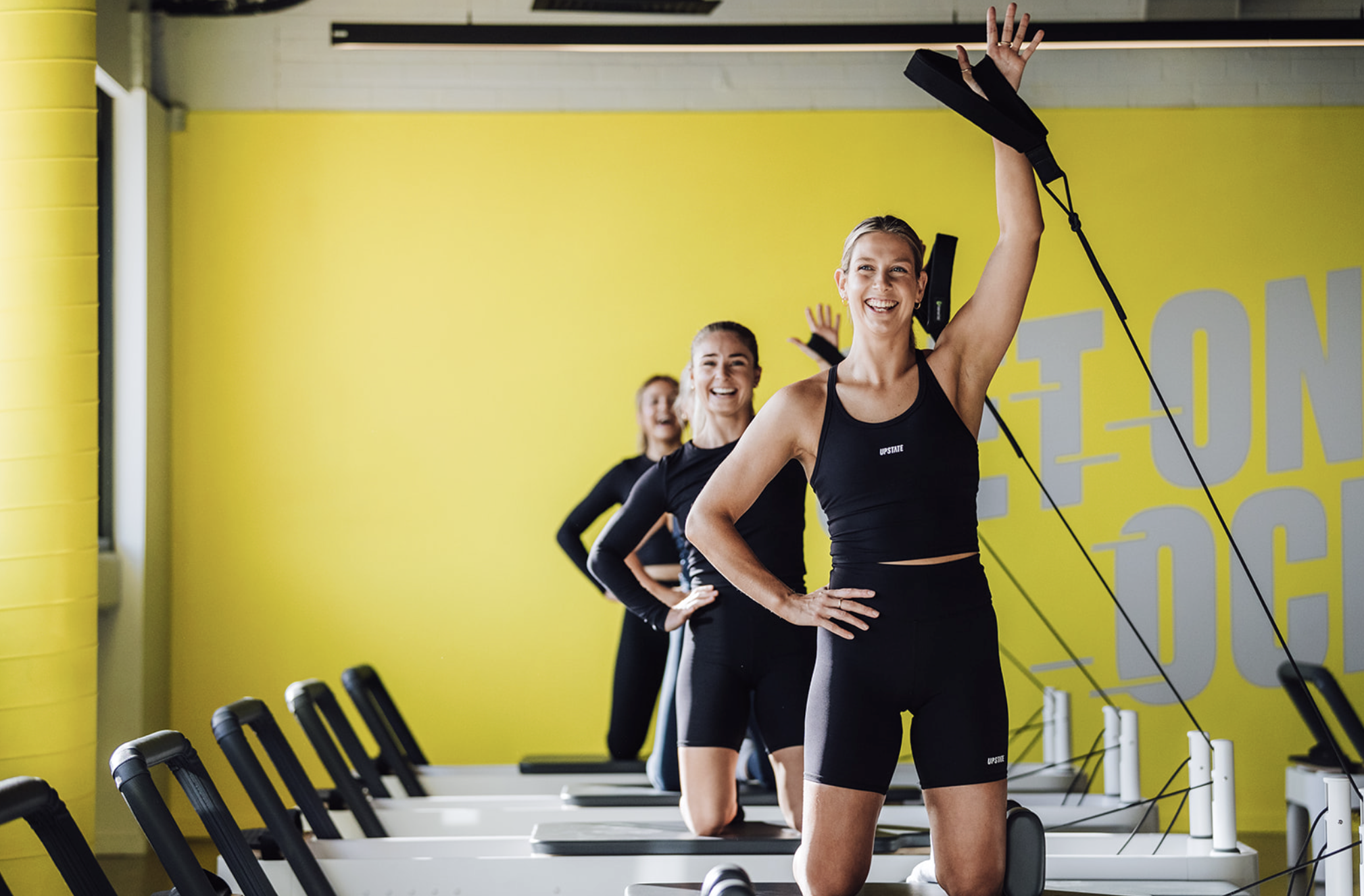
Mat vs Reformer Pilates: Key Differences 👀
| Feature | Mat Pilates 🧘♀️ | Reformer Pilates ✨ |
|---|---|---|
| Equipment | Uses a mat and bodyweight, sometimes with small props like bands or light weights | Uses a reformer machine with springs, pulleys, straps and a moving carriage |
| Resistance Style | Bodyweight resistance and deep core control | Adjustable spring resistance for support or added challenge |
| Intensity | Can feel deceptively challenging with slow, controlled movements and core endurance | Easily adjustable from beginner-friendly to highly athletic and strength-focused |
| Muscle Focus | Heavy focus on core stabilisation and body awareness | Allows more targeted muscle activation and progressive strength training |
| Class Feel | Simple, grounded and accessible | Dynamic, full-body and highly varied |
| Learning Curve | Familiar and easy to start anywhere | Can feel intimidating initially, especially for newcomers, but guided instruction makes it approachable |
| Accessibility | Easy to do at home, while travelling or online | Usually requires access to a studio or reformer machine |
| Cost (Australia) | Generally more affordable 💛 | Typically more premium due to equipment and smaller class sizes |
| Instructor Attention | Often larger class sizes | Usually smaller classes with more personalised guidance |
| Best For Beginners | Great for learning foundational Pilates principles | Great for support, feedback and guided movement |
| Joint Support | Lower impact, but relies more on self-stabilisation | Springs can support movement, provide stability, and reduce joint stress |
| Rehab & Injury Support | Helpful once foundational strength is established | Often preferred for injury rehab, pregnancy and mobility limitations |
| Variety of Exercises | More limited by bodyweight movement patterns | Huge range of exercises in different positions |
| Convenience | Extremely portable and flexible | Less portable due to equipment requirements |
| Overall Experience | Minimal, mindful and technique-focused | Athletic, flowing and resistance-based 🔥 |
In pilates vs reformer pilates vs mat pilates, reformer also suits advanced practitioners because resistance and exercise progressions can be scaled up.
While both styles share the same Pilates foundations, they feel quite different in practice, and while the machine can feel intimidating for newcomers and carries some risk if exercises are done incorrectly, its support and stability are also why it is often preferred for injury recovery.
Equipment and Setup
Mat Pilates
- Uses bodyweight and minimal equipment
- Can be done anywhere
- Requires very little setup
- Great for home or travel workouts
Reformer Pilates
- Uses a reformer machine with springs and pulleys
- Usually performed in a pilates studio setting
- Offers more exercise variety and resistance options
- Requires instructor guidance initially
Resistance, Intensity and Muscle Focus
Mat Pilates
Mat Pilates relies heavily on bodyweight resistance and deep core stabilisation. Without external support, your muscles work hard to control every movement.
It can feel deceptively challenging — especially during slow, controlled sequences and long holds. 🔥
Reformer Pilates
The reformer adds adjustable spring resistance, allowing for:
- heavier strength-focused work
- targeted muscle activation
- progressive overload
- more movement variation
It can feel both supportive and intensely challenging depending on the setup.
Learning Curve and Confidence
Mat Pilates
Most people feel more familiar exercising on a mat, making it less intimidating initially.
However, without machine support, it can sometimes be harder to understand proper alignment and core engagement.
Reformer Pilates
The machine can look overwhelming at first, but good instructors guide you every step of the way.
Many beginners actually find reformer Pilates easier to connect with because the springs provide feedback and support.
Cost, Class Size and Accessibility (Australia)
Mat Pilates
- Generally more affordable
- Easier to access online or on-demand
- Often available in larger group classes
- No equipment investment required
Reformer Pilates
- Typically more expensive due to equipment and smaller class sizes
- Offers more personalised instructor attention
- Requires studio access or home equipment
In Australia, mat classes are usually the more budget-friendly option, while reformer classes often feel more boutique and personalised.
Rehab, Injury and Special Populations
Mat Pilates
Mat Pilates can be fantastic for building strength and body awareness once foundational movement patterns are established.
Reformer Pilates
Because the springs can support movement and reduce joint load, reformer Pilates is often recommended for:
- injury rehabilitation
- prenatal and postnatal movement
- older adults
- people with joint pain or mobility limitations
For clinical needs, working with a physio-led or clinical Pilates instructor is always recommended.
Shared Benefits of Mat and Reformer Pilates 💛
No matter which style you choose, both mat and reformer Pilates are designed to help you move better, feel stronger and reconnect with your body.
Both methods are:
- low-impact
- beginner-friendly
- adaptable for different fitness levels
- focused on strength, control and mobility
Some reformer exercises can also be done in a horizontal position to reduce joint stress, and both approaches can support improving posture. If you’re managing injuries or other clinical concerns, consult your healthcare team before starting Pilates.
Flexibility and Mobility
Pilates encourages:
- better joint mobility
- improved flexibility
- increased range of motion
- less stiffness and tension
Posture, Balance and Core Control
Regular Pilates can help:
- improve posture
- reduce lower back discomfort
- strengthen stabilising muscles
- enhance balance and coordination
Mental Health and Stress Relief
One of the most underrated benefits of Pilates? The mental reset. ✨
The combination of breathwork and mindful movement can help:
- reduce stress
- improve focus
- boost mood and energy
- create a stronger mind-body connection
Which Option Is Right For You? 👇
If You’re a Complete Beginner
Both mat and reformer Pilates are beginner-friendly — it just depends on what feels most comfortable for you.
Mat Pilates is great for:
- learning foundational principles
- building body awareness
- starting affordably
Reformer Pilates is great for:
- extra guidance and support
- understanding movement patterns
- feeling challenged with lower impact
A beginner or intro class is always the best place to start.
If You’re Recovering From Injury or Pregnant
Reformer Pilates or clinical Pilates is often the better option because the springs provide support and exercises can be modified more precisely.
Always speak with your healthcare provider and choose experienced instructors who understand injury management or prenatal movement.
If You’re on a Budget or Want to Train at Home
Mat Pilates wins for accessibility and convenience. ✨
You can:
- practice anywhere
- follow online classes
- train while travelling
- build consistency without expensive equipment
If You Want Maximum Variety and Challenge
Reformer Pilates offers more:
- exercise variation
- progressive resistance
- athletic challenge
- full-body strength training opportunities
It’s a great option if you love dynamic, ever-changing workouts.
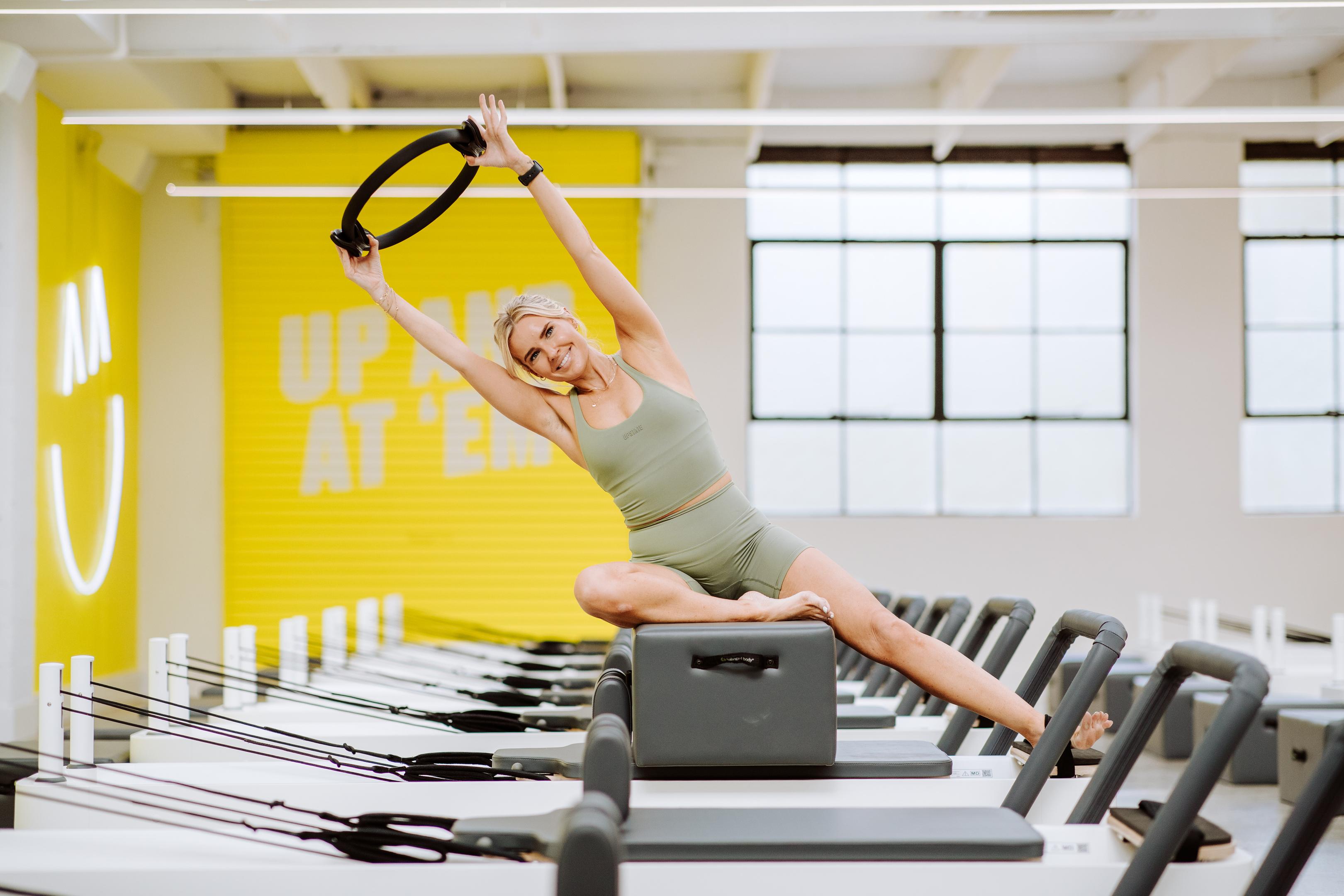
Combining Mat and Reformer for Best Results
Honestly? You don’t have to choose just one. 💛
Many people get the best results by combining both styles:
- mat Pilates builds foundational control and body awareness
- reformer Pilates adds resistance, variety and progression
Together, they create a balanced movement practice that supports strength, mobility and longevity.
Frequently Asked Questions ✨
Is reformer Pilates harder than mat Pilates?
Not necessarily. Both can be incredibly challenging in different ways. Mat Pilates often demands more core stabilisation, while reformer Pilates adds adjustable resistance and complexity.
Is mat Pilates enough to build strength on its own?
Absolutely. Mat Pilates can build serious strength, endurance and control — especially when practiced consistently.
Can beginners go straight into reformer Pilates classes?
Yes! Beginner reformer classes are specifically designed to teach you how to use the machine safely and confidently.
Which is better for back pain: mat or reformer Pilates?
It depends on the individual. Reformer Pilates is often preferred initially because the machine can provide additional support and reduce joint load.
Is reformer Pilates worth the extra cost?
For many people, yes. The equipment, variety, smaller class sizes and personalised guidance can make reformer Pilates feel incredibly effective and motivating.
How many times per week should I do Pilates to see results?
Most people notice improvements in strength, posture and energy with 2–4 classes per week alongside consistency over time.
Can older adults or people with arthritis do reformer Pilates safely?
Yes, reformer Pilates is often an excellent low-impact option for older adults and people managing joint concerns, especially with qualified instruction.
What’s the difference between clinical Pilates and reformer Pilates?
Clinical Pilates is usually physio-led and focused on rehabilitation or injury management, while studio reformer Pilates is more fitness and strength focused.