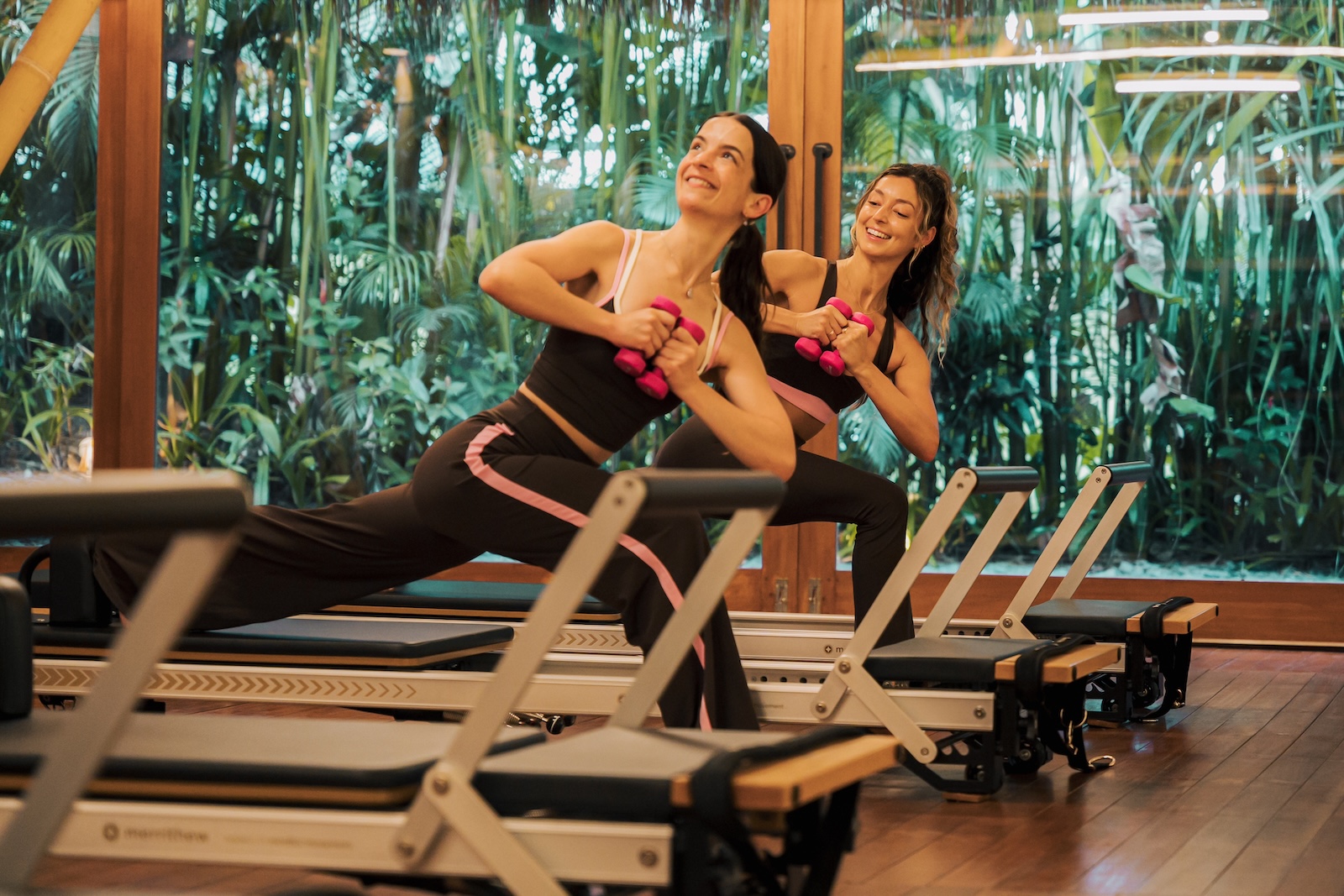
Running is a great way to build cardiovascular fitness, but improving as a runner takes more than adding kilometres to your week. Pilates helps complement your running routine by developing core stability, hip and glute strength, mobility and control through single-leg movements. Whether you’re training for your first 5K or preparing for a marathon, adding Pilates can help you build a more balanced approach to training.
At Upstate Studios, you can mix Reformer, Mat and other movement styles into your routine to support your running goals, improve body awareness and make time for movement beyond the track.
Why Runners Should Do Pilates
Running involves repeating a similar movement pattern thousands of times, placing regular demands on the legs, hips and feet. While running builds endurance and cardiovascular fitness, it doesn’t always address every aspect of strength, mobility and movement control that runners need.
Pilates complements running by challenging the body in different ways. Exercises focus on core stability, hip strength, controlled movement and coordination, helping you develop awareness of how your body moves.
Research has investigated whether Pilates can improve running performance. A small 12-week study involving recreational runners reported improvements in measures including 5K performance and aerobic fitness following Pilates training. However, research in this area is still developing, and results from a small study don’t guarantee the same improvements for every runner.
Think of Pilates as a supporting part of your training plan, alongside appropriate running volume, recovery, nutrition and progressive strength work.
Explore Reformer Pilates at Upstate Studios to see how controlled, resistance-based movement can complement your running routine.
Benefits of Pilates for Runners
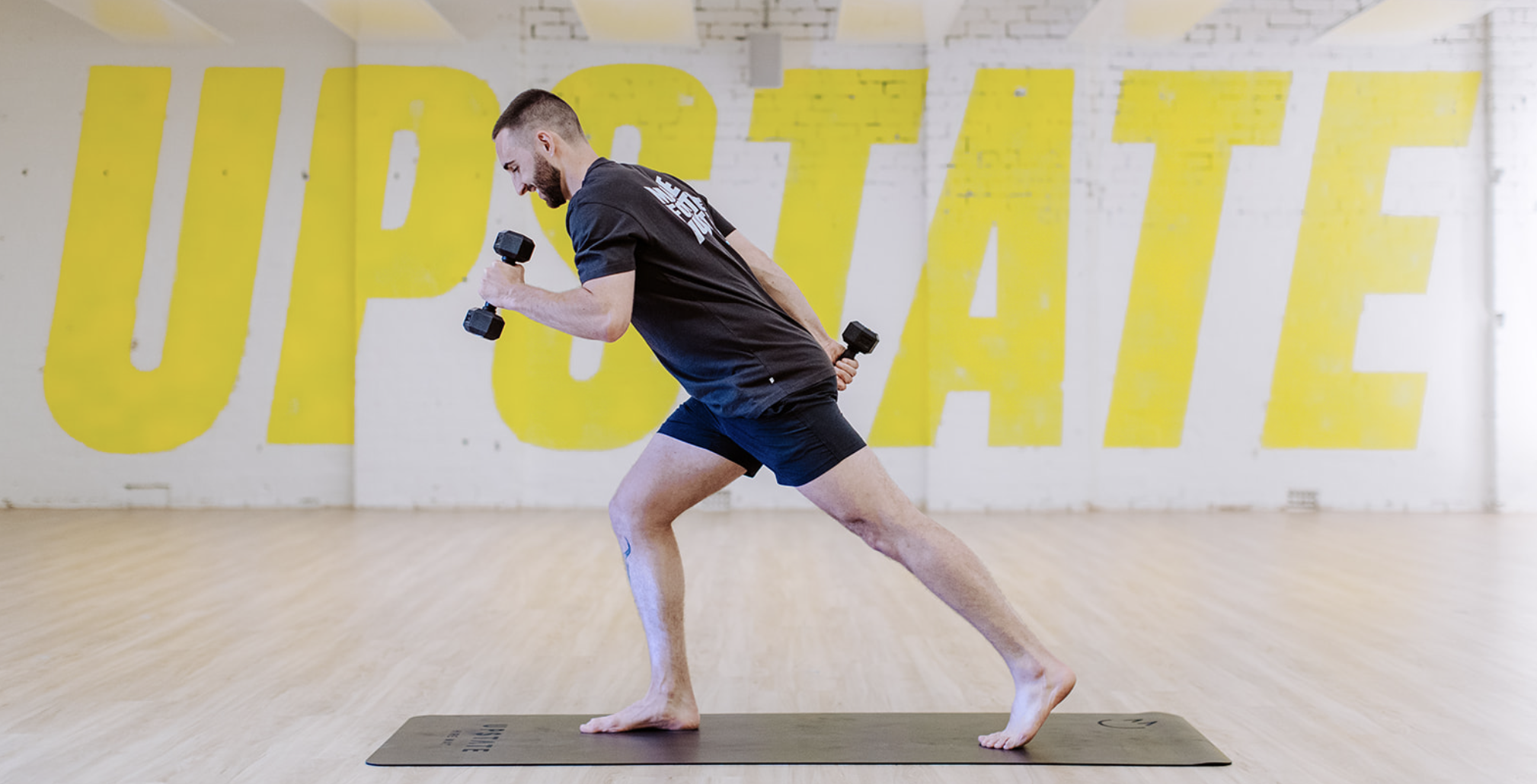
Pilates can help runners develop the strength, control and mobility that support efficient movement. Here are some of the key benefits of adding it to your weekly training.
Stronger Core Strength and Better Running Form
Your core helps stabilise your trunk and pelvis as you run. When your core muscles work effectively, they help you maintain control as your body moves through each stride.
Pilates includes exercises that challenge the abdominal muscles, back and deeper trunk stabilisers. Developing a strong core and the deep muscles that support the spine can improve posture, support good posture as fatigue builds, and help you maintain your running technique.
Pilates won’t automatically correct every running-form issue, but it can help you develop more control and awareness of your body’s position. Better trunk control can improve running mechanics, reduce wasted lateral movement, and lower metabolic cost, which can help you become a better runner.
Hip and Glute Strength
Your glutes and hip muscles play an important role in controlling your pelvis, helping your legs move, and generating power during running. They also contribute to stability when you land on one leg with every stride.
Exercises such as bridges, clamshells and side-lying leg lifts, with the top leg straight, target muscles around the hips and glutes that may benefit from additional strengthening.
Building strength in these areas can complement your running training, particularly when combined with appropriate lower-body resistance exercises, and may reduce the risk of band syndrome.
Fewer Overuse Injuries
Running-related problems can include iliotibial band (ITB) pain, runner’s knee, shin splints and lower back discomfort. These issues can have multiple contributing factors, including training load, recovery, strength, biomechanics and individual health history.
Pilates may help address some contributing factors as a low impact exercise that can support cross training for runners by improving strength, movement control and awareness, and building more strength and control may help prevent injury and reduce the risk of injury, including some overuse issues. However, it hasn’t been established as a way to prevent every running injury, and stronger muscles alone don’t guarantee injury prevention.
If you experience persistent or worsening pain, consult a physiotherapist or sports medicine professional. They can assess the cause and help you adjust your training rather than relying on Pilates alone, which should complement warm-ups, cool-downs and rest rather than replace them.
Better Mobility and Stride Length
Comfortable mobility around the hips, ankles and thoracic spine can help support the muscles and joints used in running, letting you move through your running stride without unnecessary restriction. Pilates combines controlled movement with exercises that challenge range of motion and increases flexibility.
For runners who spend much of their day sitting, gentle hip mobility and spinal rotation exercises may be particularly useful additions to their routine.
The goal isn’t to force a longer stride. Instead, work towards comfortable movement and strength through the ranges you need for running, without compromising control, while regular Pilates can enhance flexibility in the hamstrings, calves and hip flexors, which may help reduce muscle strains.
Breathing Control
Breathing is central to Pilates, with many exercises encouraging you to coordinate your breath with movement. This can help you become more aware of your breathing patterns and how you manage tension during exercise.
That awareness may be useful when running, particularly when you’re concentrating on staying relaxed during challenging efforts. However, Pilates breathing techniques don’t replace the aerobic conditioning needed to improve running endurance.
Correcting Left and Right Imbalances
Most runners have a preferred side or differences in strength, coordination and mobility between their legs. Some variation is normal, but significant differences can affect how comfortably you perform certain movements.
Pilates often includes unilateral exercises, meaning each side of the body works independently and can target different muscle groups on each side. Single-leg bridges, side planks, single-leg circles and controlled leg movements can build overall strength while creating a good balance between strength, mobility and coordination work across muscle groups.
If you notice a persistent or significant imbalance, especially alongside pain, a physiotherapist can help determine whether it needs specific attention.
For more on how Pilates fits into athletic training, read our guide to why athletes love Pilates.
8 Best Pilates Exercises for Runners
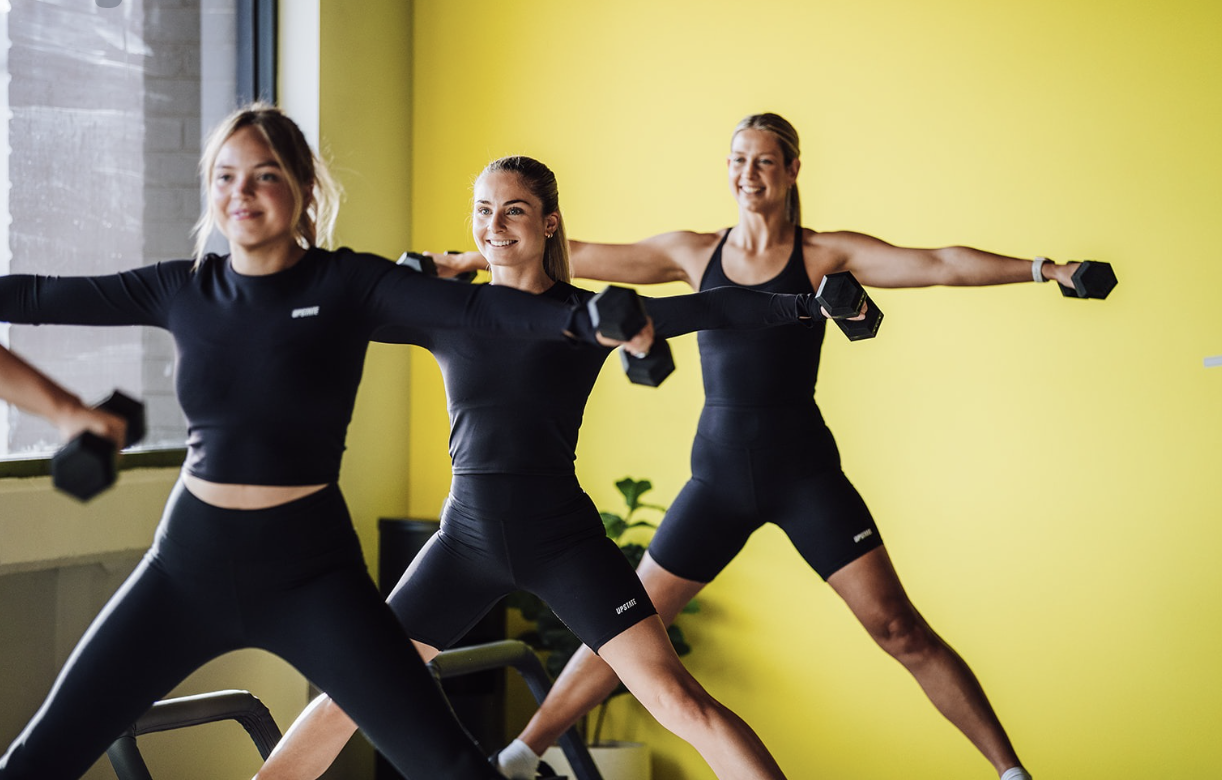
These eight Pilates-inspired exercises target areas runners regularly use, including the core, hips, glutes and back. You can practise many of them at home with a mat and a little space.
Start with controlled movements and aim for 2-3 sets of 10-12 reps for each exercise, adjusting the volume to your fitness level. If you’re new to exercise, have an injury or experience pain while running, check with a qualified health professional before adding unfamiliar exercises.
1. Dead Bug
Muscles worked: Deep abdominal muscles, hip flexors and core stabilisers.
How to do it:
- Lie on your back with your arms reaching towards the ceiling and your knees bent at 90 degrees.
- Gently engage your core, keeping your lower back in a comfortable, stable position.
- Slowly lower your right arm and left leg towards the floor without arching your back.
- Return to the starting position and repeat on the opposite side.
Why it matters for running: Dead bugs challenge your ability to control your trunk while moving your arms and legs independently, a useful foundation for coordinated movement.
Make it easier: Keep both feet on the floor and move one arm at a time. To make it harder, extend your leg further while maintaining control.
2. Single-Leg Glute Bridge
Muscles worked: Glutes, hamstrings and core stabilisers.
How to do it:
- Lie on your back with your knees bent and feet flat on the floor.
- Lift one foot, keeping your hips level and your core gently engaged.
- Press through the grounded foot and lift your hips, keeping a neutral spine and avoiding any arch through your lower back.
- Lower slowly and repeat before switching sides, maintaining the same position as your hips come down.
Why it matters for running: This exercise challenges single-leg hip strength and pelvic control, helping you build strong legs alongside hip strength to better support the demands of running.
Make it easier: Keep both feet on the floor and perform a regular glute bridge. To make it harder, pause briefly at the top of each repetition while keeping your pelvis level.
3. Side Plank With Leg Lift
Muscles worked: Obliques, gluteus medius and other hip stabilisers.
How to do it:
- Lie on your side with your elbow positioned beneath your shoulder.
- Lift your hips into a side plank, keeping your body aligned.
- If comfortable, lift your top leg a short distance without rotating your pelvis.
- Lower your leg and hips with control, then repeat on the other side.
Why it matters for running: It challenges lateral core and hip strength, which contribute to controlling your pelvis during single-leg stance.
Make it easier: Keep your bottom knee bent and on the floor, and hold a modified side plank without lifting your top leg. To make it harder, extend both legs and add the lift while maintaining good alignment.
4. Clamshells
Muscles worked: Gluteus medius, gluteus minimus and other hip external rotators.
How to do it:
- Lie on your side with your knees bent and your feet together.
- Keep your hips stacked and your feet touching.
- Slowly lift your top knee while keeping your pelvis still.
- Lower with control and repeat before changing sides.
Why it matters for running: Clamshells target muscles around the hips that contribute to pelvic stability and leg control.
Make it easier: Reduce the height of the knee lift. To make it harder, add a light resistance band above your knees without allowing your hips to roll backwards.
5. Single-Leg Circles
Muscles worked: Hip muscles, abdominal stabilisers and muscles that control the pelvis.
How to do it:
- Lie on your back with one knee bent and the other leg extended towards the ceiling, within a comfortable range.
- Keep your pelvis steady and your shoulders relaxed.
- Draw small, controlled circles in the air with your raised leg.
- Complete a few circles in each direction before switching sides.
Why it matters for running: The exercise challenges hip mobility while asking your core to stabilise the pelvis as your leg moves.
Make it easier: Bend the raised knee slightly and make smaller circles. To make it harder, gradually increase the circle size while keeping your pelvis steady.
6. Swimming
Muscles worked: Back extensors, glutes, shoulders and core stabilisers.
How to do it:
- Lie face down on a mat with your arms extended in front of you and your legs comfortably long.
- Gently engage your core and keep your neck in a neutral position.
- Lift one arm and the opposite leg a small distance, keeping the movement controlled.
- Lower and alternate sides, breathing naturally throughout.
Why it matters for running: Swimming challenges the muscles along the back of your body and encourages coordination between opposite limbs.
Make it easier: Lift one arm or one leg at a time, or practise the movement on hands and knees. Avoid lifting so high that you compress your lower back.
7. Kneeling Hip Flexor Stretch
Muscles worked and stretched: Hip flexors, with gentle engagement of the glutes and core.
How to do it:
- Kneel on a padded mat with one knee down and the other foot planted in front.
- Keep your torso upright and gently engage your core.
- Squeeze the glute on the kneeling side and shift your pelvis slightly forwards until you feel a gentle stretch at the front of that hip.
- Hold for 20–30 seconds while breathing normally, then change sides.
Why it matters for running: The stretch can help you work on comfortable hip extension, particularly if your hips feel stiff after long periods of sitting.
Make it easier: Place your back knee on extra padding or try a standing split-stance stretch with your hands supported on a wall. Don’t force the stretch or arch your lower back.
8. Thread the Needle
Muscles worked and mobilised: Thoracic spine and shoulder region, with gentle trunk stabilisation.
How to do it:
- Start on your hands and knees, with your hands beneath your shoulders and knees beneath your hips.
- Slide your right arm underneath your left arm, allowing your upper back to rotate gently.
- Lower your shoulder towards the mat only as far as feels comfortable.
- Return to the starting position and repeat on the other side.
Why it matters for running: This movement encourages comfortable upper-back rotation and mobility, complementing the repetitive forward movement of running.
Make it easier: Keep the movement small or practise it seated, gently rotating your upper body without forcing the range. Avoid deep twisting if you’ve been advised to restrict spinal rotation.
Reformer Pilates for Runners
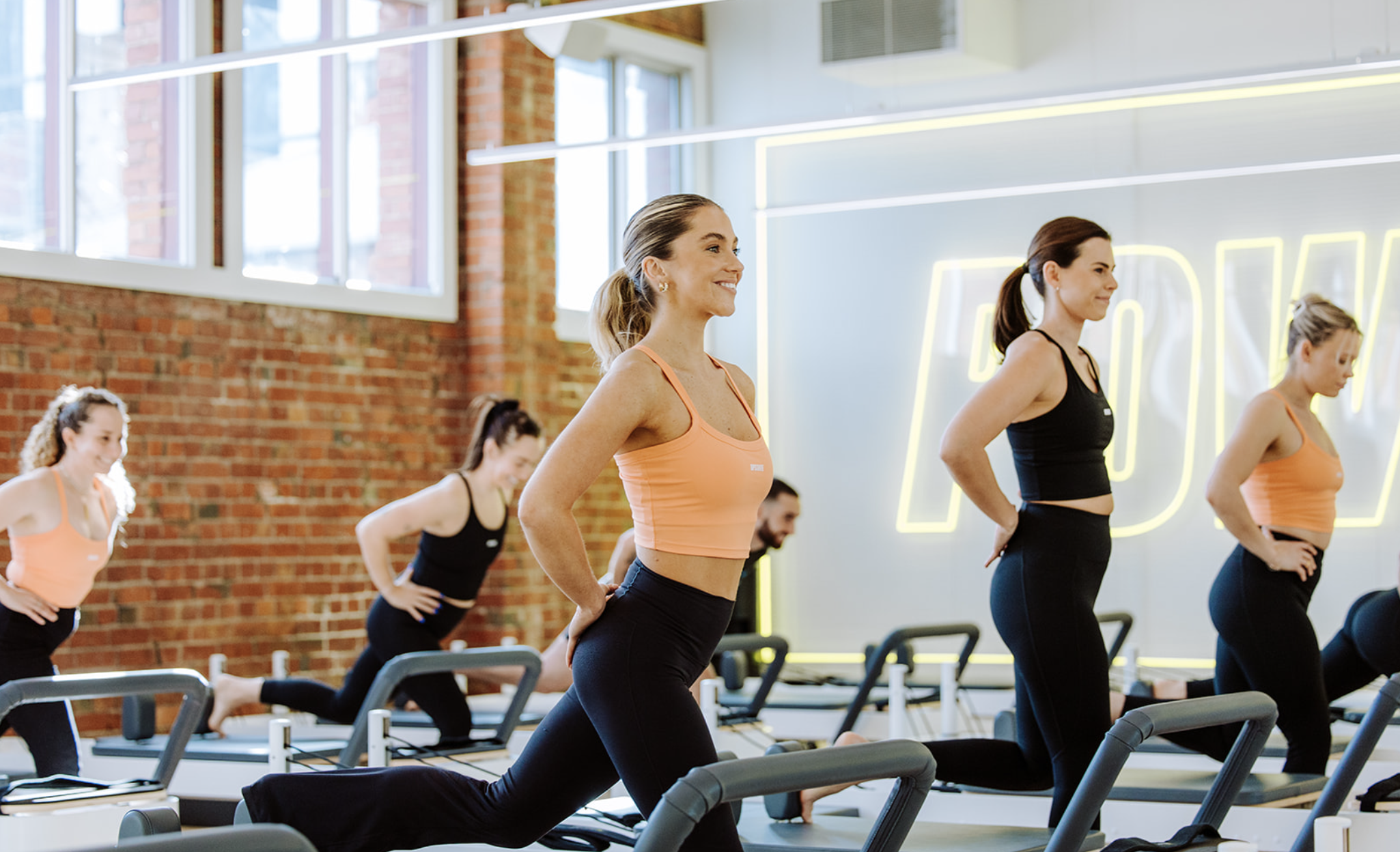
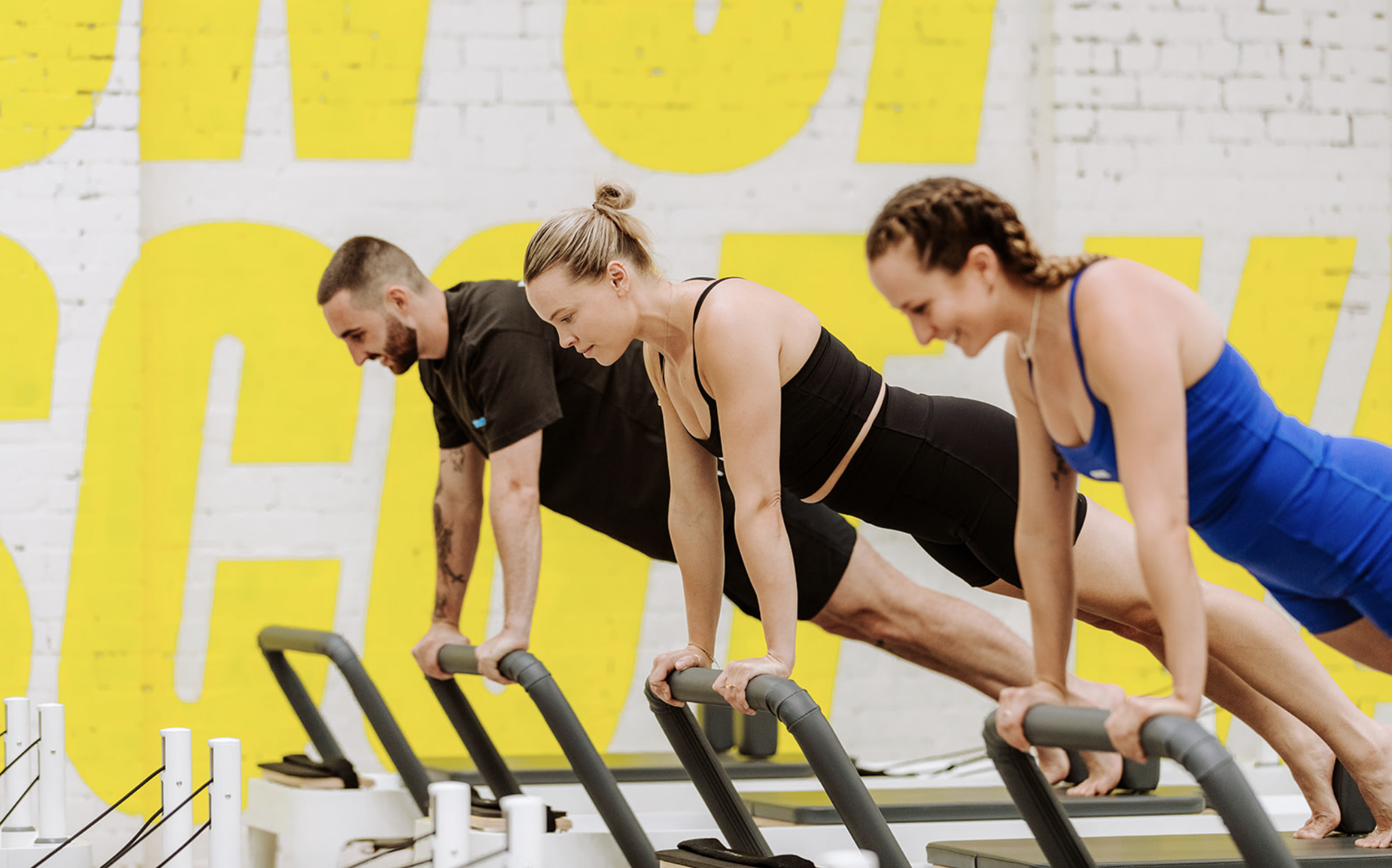
Reformer Pilates can be a useful addition to a running program because it combines controlled movement with adjustable spring resistance, making it an excellent choice for runners who want low-impact support work. The equipment can support exercises that challenge the legs, hips and core while allowing you to adjust the load to suit your experience.
Here are a few ways Reformer work can complement running.
- Single-leg control: Suitable exercises can challenge hip and pelvic stability while each leg works independently.
- Foot and ankle strength: Reformer footwork can engage the calves and other muscles around the ankles, although it doesn’t replace dedicated calf-strengthening work when needed.
- Core stability: Controlled movements ask you to maintain trunk and pelvic control while your arms or legs move; pilates strengthens smaller stabilisers and can complement strength training rather than replace it.
- Mobility and coordination: Exercises can take your body through controlled ranges of movement while encouraging awareness of alignment.
- A complement to gym training: Reformer classes can add variety to a strength program, although runners seeking substantial muscle-strength gains may also benefit from progressive resistance training.
Your ideal class will depend on your running load and experience. If you’re new to the Reformer, choose a beginner-friendly or technique-focused class and let your instructor know you’re a runner.
Explore Reformer Pilates at Upstate Studios to find out more about the equipment and class style.
Should You Do Pilates Before or After a Run?
Both options can work, but timing your Pilates sessions around your running intensity can help you get more out of each workout.
Before a run: Keep Pilates light and brief, around 10-15 minutes. Gentle core activation, glute engagement and dynamic mobility can help you prepare to move, but avoid a demanding strength session immediately before intervals, a race or a long run.
After a run: A gentle Pilates session may be appropriate after an easy run if you’re feeling comfortable. However, after a hard workout, prioritise your cooldown, hydration, food and recovery rather than forcing another challenging session into your day.
On a separate day: Scheduling a more demanding Pilates class on an easy running day or away from your hardest sessions can make it easier to manage fatigue and maintain good technique, and it can also work well as cross training when it doesn’t interfere with your key runs.
If you have an important run coming up, avoid introducing unfamiliar exercises or unusually challenging Pilates sessions immediately beforehand. The aim is to complement your running, not leave your legs too fatigued to train well.
How Often Should Runners Do Pilates?
For many recreational runners, two Pilates sessions a week during base training is a practical starting point. This provides regular opportunities to work on strength, stability and mobility alongside your running sessions.
Your ideal frequency will depend on your running mileage, other strength workouts, experience and recovery.
- Beginners: Start with one session a week, then build to two as you become more comfortable.
- Base training: Aim for two sessions a week if your schedule and recovery allow.
- Peak training: One or two shorter or lighter sessions may be more manageable as running volume increases.
- Race week and taper: Reduce the intensity and volume of supplementary training. One light session, or skipping Pilates altogether if needed, may be appropriate.
These are general guidelines rather than strict rules. If you’re already doing demanding gym sessions, you may not need two additional challenging Pilates classes each week.
For more guidance on building your routine, read our article on how many times a week you should do Pilates.
Sample Weekly Plan: Running and Pilates
A balanced running week should include a mix of easy running, harder efforts, recovery and strength work. The schedule below is an example for a recreational runner who already tolerates regular running and wants to add two Pilates sessions.
Adjust the days, distances and intensity to your current fitness level and training plan. If you’re new to running, build your running volume gradually rather than jumping straight into a demanding weekly schedule.
| Day | Training | Focus |
|---|---|---|
| Monday | Easy run | Comfortable pace and aerobic fitness |
| Tuesday | Reformer Pilates | Core, hips, glutes, posture and strong core work |
| Wednesday | Interval run | Speed or running efforts suited to your level |
| Thursday | Rest or gentle yoga | Mobility and recovery |
| Friday | Easy run + short Mat Pilates session | Comfortable mileage and low-impact cross training that supports overall strength |
| Saturday | Rest or gentle walk | Recovery before the long run |
| Sunday | Long run | Endurance at a sustainable pace |
How to adapt the plan: If you’re feeling fatigued, shorten the Friday session or skip it. If your interval workout or long run is particularly demanding, consider making the Pilates session lighter or moving it further away from that workout.
During race week, reduce the volume and intensity of your supplementary training. Avoid new exercises or heavy sessions that could leave you sore before race day. Your running coach’s plan, if you have one, should take priority when scheduling your key workouts.
Pilates vs Yoga for Runners
Pilates and yoga can both complement running, but they offer different experiences.
Pilates focuses on core strength, controlled movement, muscular endurance and stability. Pilates good for runners who want controlled strength and stability work, especially if they want to build strength around their hips and trunk or improve their movement control.
Yoga combines postures, breathing, balance and relaxation. Depending on the style, it can help you work on mobility and flexibility while providing a gentler session between demanding training days.
Neither is automatically better for runners. A strength-focused yoga class may be physically demanding, while some Pilates classes are gentle and mobility-focused. Choose according to your goals, training load and recovery needs.
If your running week already includes substantial strength work, a gentle yoga session may be a useful recovery option. If you’d like additional core and hip work, Pilates may be a better fit. It can also sit alongside yoga and strength training as part of a balanced routine. You can also enjoy both across the week.
Explore yoga at Upstate Studios and find a combination that suits your running routine.
Pilates During Marathon Training and Taper
Marathon training places increasing demands on your body, particularly as long runs and weekly mileage build. Pilates can remain part of your routine throughout the training block, but the volume and intensity should adapt to your running demands.
Early Training and Base Building
This is often a good time to establish a consistent Pilates routine. One or two sessions per week can help you practise technique and develop strength while your running volume is manageable.
Start with movements you can perform comfortably and avoid adding too much new training at once.
Peak Marathon Training
As mileage increases, recovery becomes more important. You may want to maintain one or two Pilates sessions but shorten them, choose less demanding classes or reduce resistance if you’re carrying fatigue from your running.
Prioritise your key running sessions and long runs. If Pilates is affecting your ability to complete those workouts comfortably, reduce the extra load.
Taper and Race Week
During the taper, the focus shifts towards arriving at the start line feeling rested and ready. Reduce challenging Pilates work and avoid unfamiliar exercises, deep soreness or sessions that leave your legs fatigued.
A gentle mobility session may be appropriate if it feels good, but you don’t need to squeeze Pilates into race week. Resting is a valid training decision.
If you’re following a coach’s marathon plan, coordinate your supplementary training with their recommendations.
Getting Started
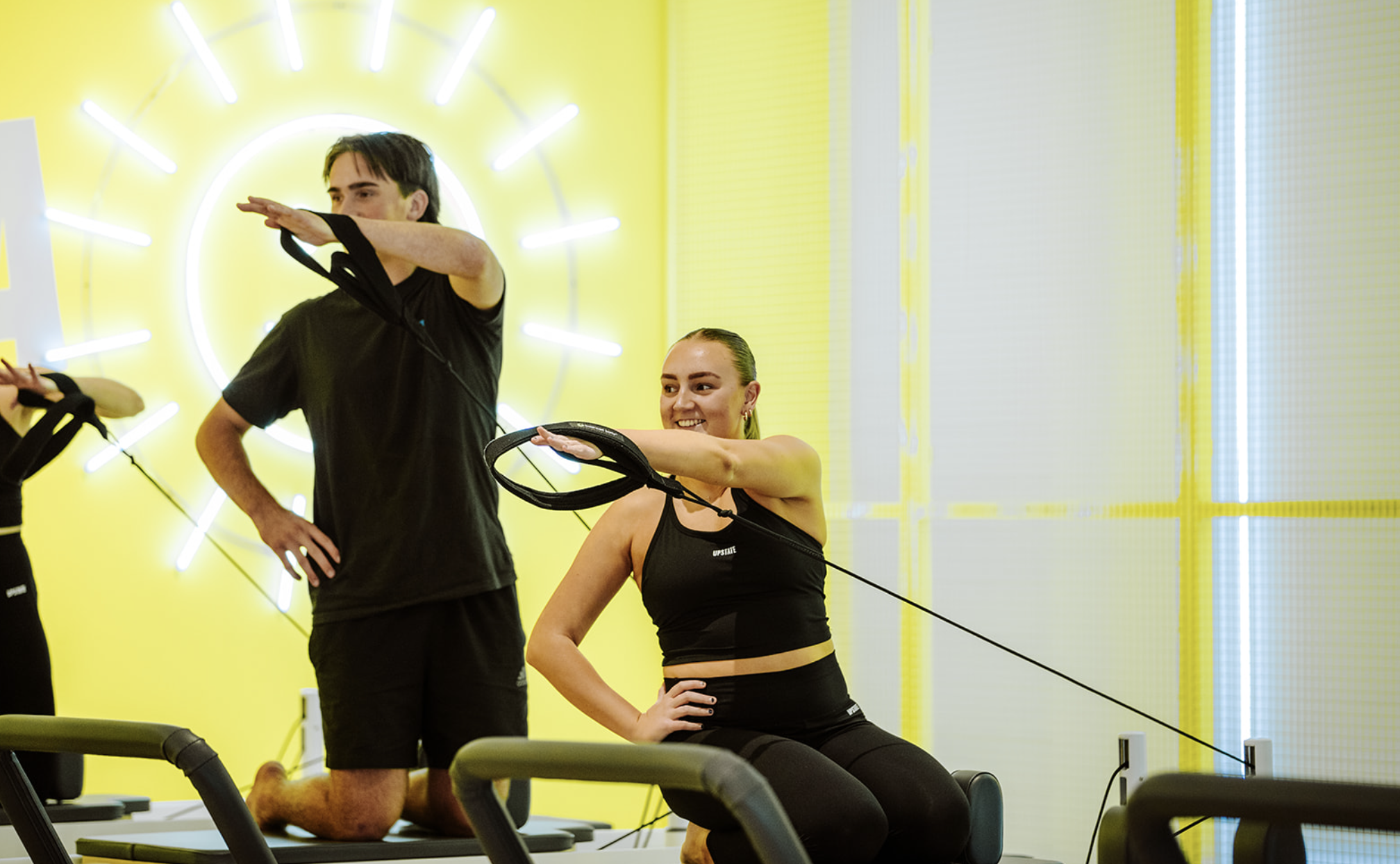
You don’t need to be an experienced Pilates enthusiast to add it to your running routine. Start with a class that suits your experience and build gradually.
A few tips to help you get started:
- Tell your Pilates teacher you’re a runner. They can help you understand the exercises and offer suitable modifications.
- Start with technique. Focus on alignment, controlled movement and breathing before increasing resistance or difficulty.
- If you’re new, begin with simple movements. As you progress, you can try options such as a squat with leg extension, which strengthens the glutes and quads.
- Expect your muscles to work differently. You may notice some glute or core soreness when you first begin, particularly after exercises you’re not used to.
- Allow time to recover. Avoid stacking several demanding workouts together when you’re still adapting to a new routine.
- Choose consistency over intensity. One or two manageable sessions each week can be more sustainable than doing too much at once, and exercise choices that match your fitness level can help prevent injury.
- Speak up about pain or injuries. If you’re managing an injury or persistent symptoms, seek advice from a physiotherapist before adding new exercises.
If you’re new to Reformer, our guide to Reformer Pilates for beginners can help you understand what to expect.
Find Your Running Rhythm at Upstate Studios 💛
Whether you’re building towards your first 5K, chasing a personal best or simply enjoying your regular runs, Pilates can be a valuable part of a balanced training routine.
Mix strength, mobility and recovery into your week, listen to your body and choose classes that support your goals without compromising your running.
If you’re new to Upstate, explore our intro offers and find a class that fits your routine. Your next feel-good session could be the perfect addition to your training plan.
Run strong. Move well. Recover smart. See you in the studio! 💛
