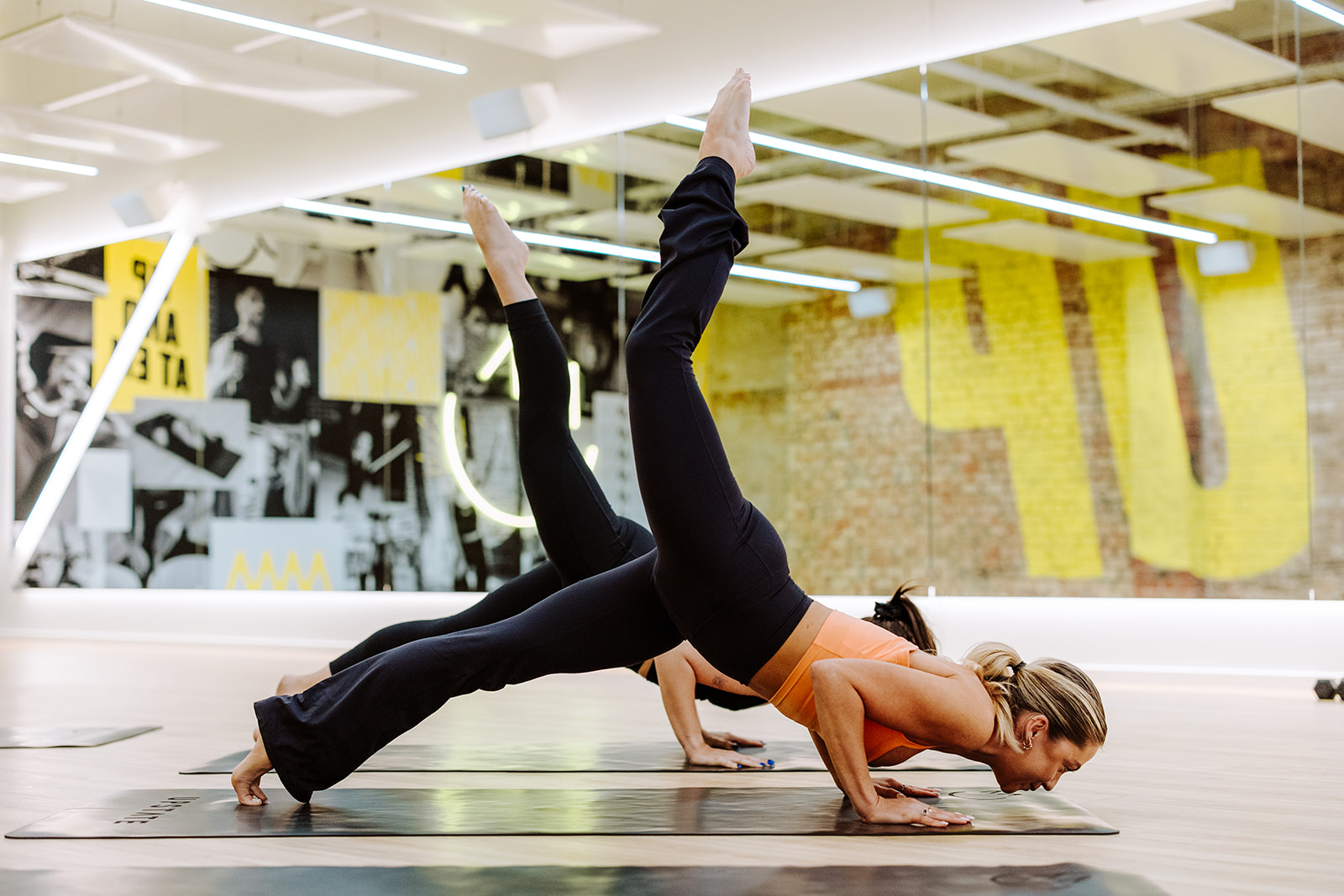
Mat Pilates is a floor-based workout that uses your own bodyweight to build strength, improve stability, and develop better body awareness. Based on the original Pilates method created by Joseph Pilates, it focuses on controlled, intentional movements that strengthen your core, improve posture, and help you move with more confidence.
Unlike Reformer Pilates, Mat Pilates doesn’t require a machine or any equipment to get started. You’ll typically use just a mat, with some classes incorporating small props like resistance bands or Pilates balls to add extra challenge. The movements are slow, controlled, and focused on quality over quantity. Making Mat Pilates accessible for every fitness level, whether it’s your first class or you’ve been moving for years.
What Are the Benefits of Mat Pilates?
Mat Pilates might look simple from the outside, but the controlled movements create a powerful full-body workout. By focusing on strength, control, breathing, and alignment, Mat Pilates helps you build a stronger connection with your body and move better both inside and outside the studio.
Builds Core Strength That Supports Everyday Movement
Core strength is at the heart of Pilates. Mat Pilates teaches you how to activate the deep muscles that support your spine, strengthen your core muscles, improve balance, and create more control through every movement.
What you’ll actually feel: Everyday tasks like sitting at your desk, carrying bags, or moving through your day can start to feel easier because your body has a stronger foundation, which also supports injury prevention in daily movement.
Improves Posture and Body Alignment
With so much time spent sitting, driving, and looking at screens, it’s common to carry tension through your shoulders, neck, and back. Mat Pilates strengthens the muscles that support better posture while helping you become more aware of how you hold and move your body, which can also lead to better coordination in day-to-day movement.
What you’ll actually feel: You may notice your shoulders relaxing away from your ears, your spine feeling taller, and your posture improving without constantly having to think about it.
Increases Flexibility and Mobility
Mat Pilates combines strength with controlled stretching, helping improve your range of movement while building stability. Instead of forcing flexibility, Pilates teaches your body to move through a greater range with control and confidence.
What you’ll actually feel: Movements like reaching, twisting, bending, and stretching start to feel smoother and less restricted.
Creates Better Mind-Body Awareness
One of the things that makes Pilates different from many workouts is the focus on connection. You’ll learn how to understand which muscles are working for increased body awareness, how to move with intention and improved concentration, and how small adjustments can make a big difference.
What you’ll actually feel: You’ll become more aware of your body, your technique will improve, and you’ll start recognising when you’re moving well.
Helps Reduce Everyday Back Tension
By strengthening your core, improving posture, and encouraging better movement patterns, Mat Pilates can help support a healthier, stronger back. It’s especially beneficial for people who spend long hours sitting or working at a desk, and when appropriately modified, it may also support those managing ongoing back discomfort or chronic pain.
What you’ll actually feel: Your lower back may feel less tight, your body may feel more supported, and everyday movements can become more comfortable.
Accessible for Every Body and Every Fitness Level
One of the biggest benefits of Mat Pilates is its accessibility. You don’t need a gym membership, expensive equipment, or previous fitness experience to get started. It’s also a low-impact exercise, so it’s gentle on the joints and easy to adapt. Every exercise can be modified to suit your body, which makes it a practical form of physical activity for many people and a strong fit for a healthy lifestyle.
What you’ll actually feel: You can walk into your first class feeling nervous and leave feeling stronger, more confident, and surprised by what your body can do.
At Upstate Studios, we take Mat Pilates to the next level with Hot Pilates, our infrared-heated mat classes that combine the benefits of traditional Pilates with the added challenge of heat. The warmth helps increase intensity, improve mobility, and create an energising workout that leaves you feeling strong, sweaty, and accomplished. Practicing mat Pilates regularly also helps beginners build confidence and skill over time. 🔥
Mat Pilates vs Reformer Pilates: What’s the Difference?
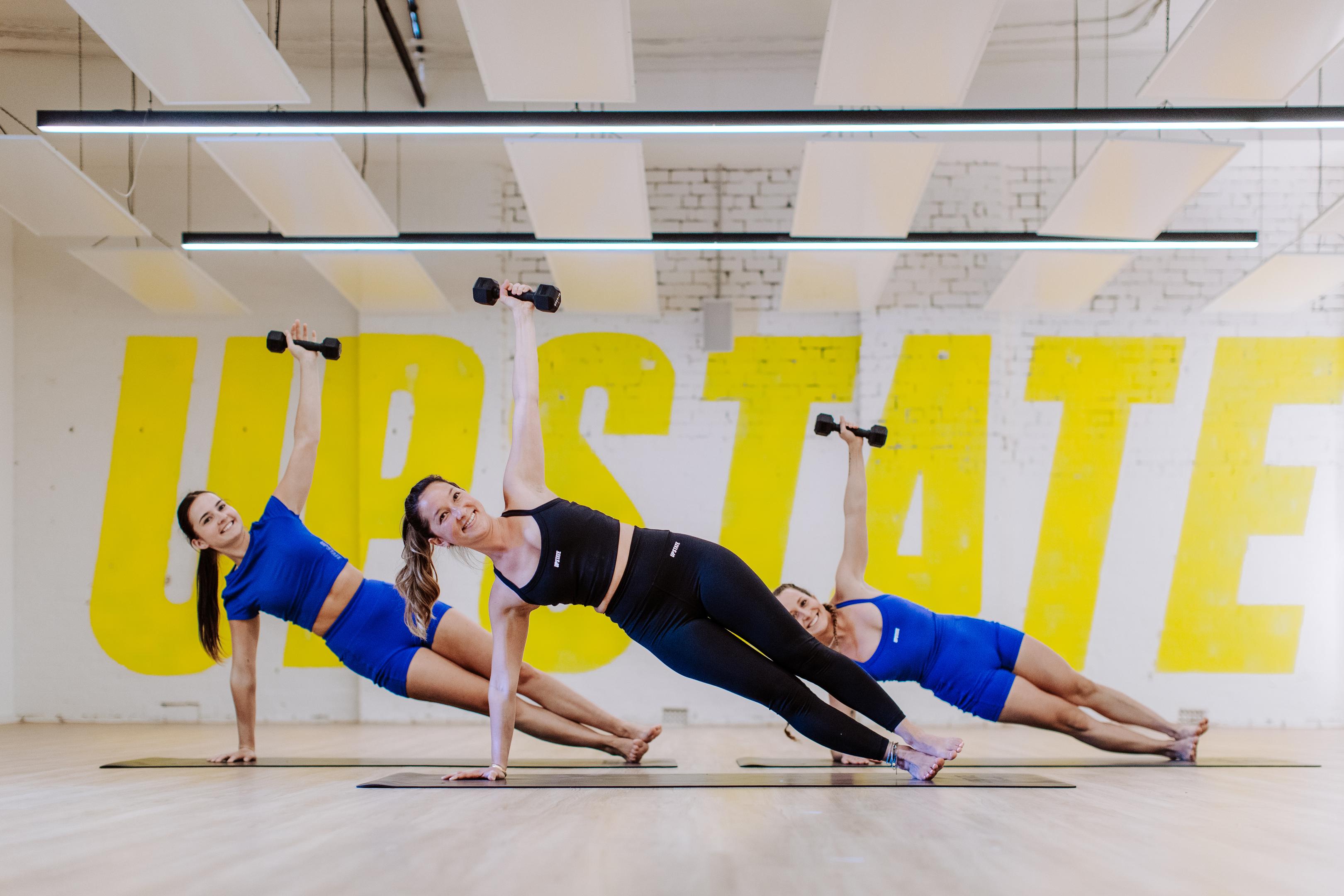
If you’re deciding which Pilates class to book, the biggest difference comes down to how you create resistance. Mat Pilates uses your own bodyweight, with your body weight providing the resistance, meaning the challenge comes from controlling your own movement, stability, and strength. There’s no machine involved, making it a simple and accessible way to start Pilates anywhere, anytime.
Reformer Pilates uses a specialised machine with a sliding carriage, springs, straps, and a footbar. The adjustable springs create resistance that can both support your movement and challenge your muscles depending on the setting. This means the reformer can make certain exercises more accessible for beginners while also adding extra intensity as your strength improves.
Because Mat Pilates relies entirely on your own body control, it can require a little more awareness of your core, balance, and alignment from the beginning. This doesn’t make it harder, it simply means you’re learning to create stability without the added feedback and support of equipment, which is one way it stands apart from similar workouts. The benefit is that you can practise Mat Pilates anywhere with no equipment required.
Reformer Pilates, on the other hand, gives you more external feedback through the moving carriage and springs, which can help beginners understand how movements should feel. It also allows instructors to adjust the resistance to suit your body, experience level, and goals.
Neither style is better. They train your body in different ways. Mat Pilates is a great choice for building foundational strength, mobility, and body awareness, while Reformer Pilates offers extra support, resistance, and variety.
If you’re still unsure which one is right for you, the best way to find out is to try both. At Upstate Studios, our 30 Day Intro Offer gives you access to both Mat and Reformer Pilates across all locations, so you can experience both styles and discover what works best for your body and goals. 💙
Mat Pilates vs Yoga: Are They the Same Thing?
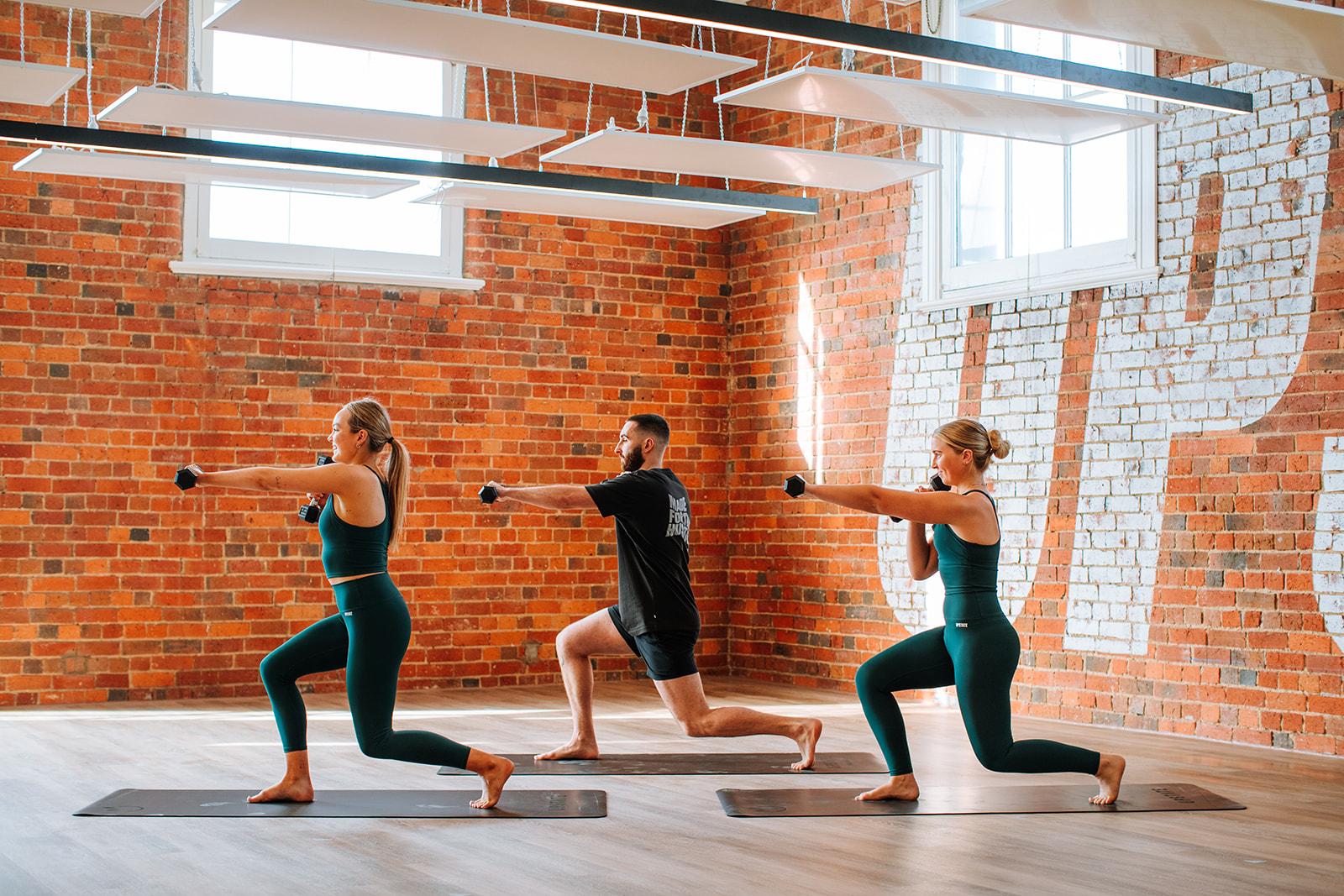
Mat Pilates and yoga can look similar from the outside. They both involve moving on a mat, controlled breathing, and a focus on connecting your mind and body. However, they are two different practices with different goals and approaches to movement.
Pilates is built around core strength, spinal stability, posture, and controlled movement patterns. Each exercise is designed to strengthen specific muscle groups while improving your balance, coordination, and body awareness. The focus is often on building functional strength that helps you move better in everyday life.
Yoga has a broader tradition that combines physical movement with mindfulness, breathwork, meditation, and flexibility. Many yoga styles place more emphasis on mindful movement, meditation, relaxation, longer holds, stretching, and mobility. If you’re looking for more of a mind, body, and spirit practice, yoga may feel like a better fit.
So which one is better? It depends on what you’re looking for. If your goal is to build strength, improve posture, and develop more control over your movement, Pilates may be the better fit. If you’re looking for deeper flexibility, relaxation, and a more meditative movement practice, yoga may be what you enjoy most. Many people find that combining both creates the perfect balance of strength, mobility, and mindfulness, and can complement other forms of training in a balanced routine.
At Upstate Studios, you don’t have to choose between the two. We offer both Yoga classes and Hot Pilates classes, giving you the flexibility to build a routine that supports how you want to move, feel, and recharge.
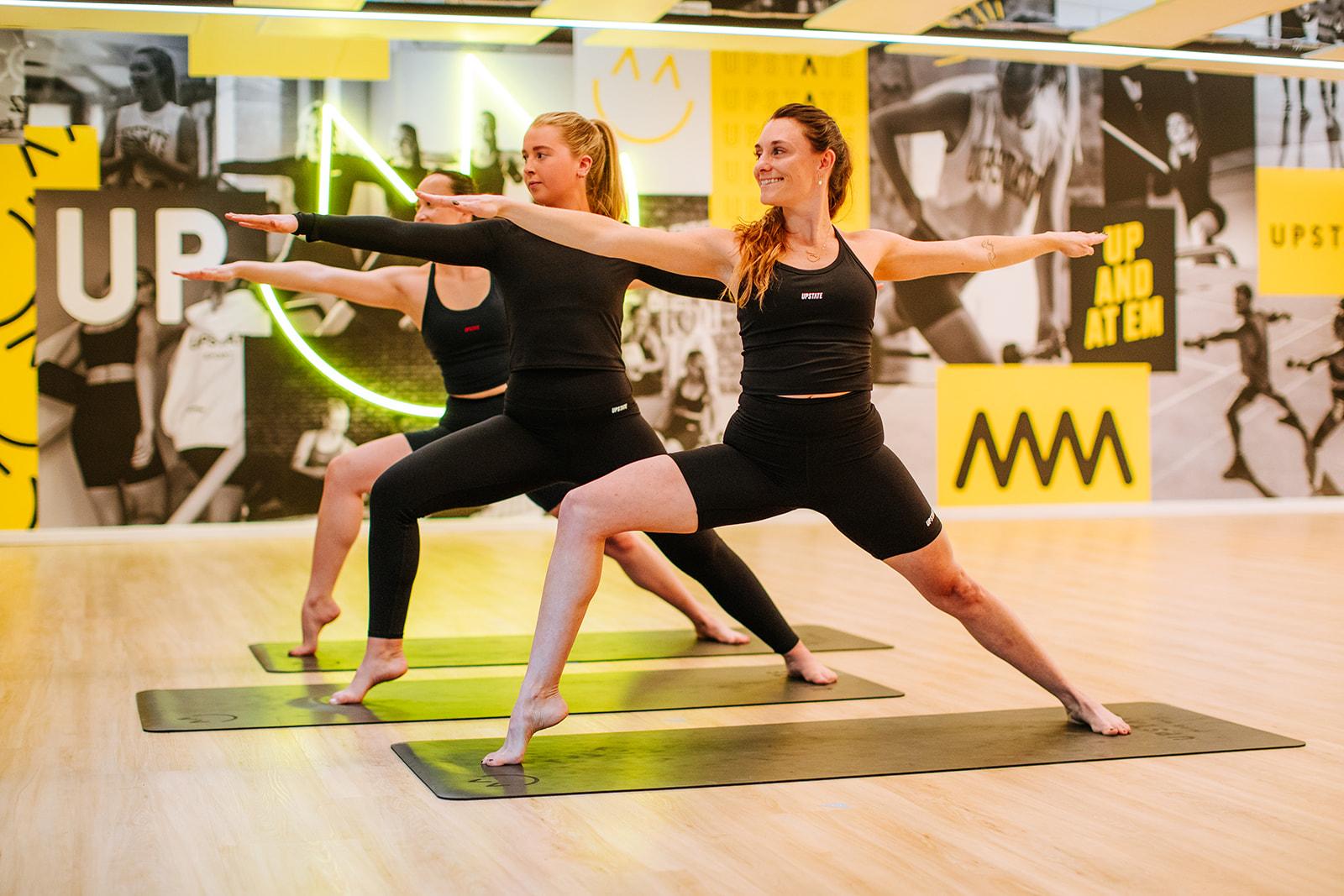
What Happens in a Mat Pilates Class at Upstate?
Walking into your first Mat Pilates class can feel a little unknown, but at Upstate Studios, we’ve designed the experience to feel welcoming, energising, beginner-friendly, and like a supportive environment from the moment you arrive.
When you enter the studio, you’ll find a purpose-built space designed for movement, connection, and good energy. A certified instructor will guide you through setting up your mat, explain what to expect, and help you feel comfortable before class begins while cueing proper form. No experience is needed, just bring yourself and be ready to move.
A typical Mat Pilates class lasts between 45 minutes to an hour, and at Upstate, your 45-minute class starts with a warm-up focused on breathing, posture, and connecting with your core. Throughout the session, your instructor will guide you through controlled Pilates movements, explaining what muscles should be working, how to move with intention, and how to adjust exercises to suit your body.
Every class is designed to meet you where you’re at. Whether you’re completely new to Pilates or looking to build more strength and control, modifications are always offered so you can move confidently and safely. Your instructor will provide technique cues throughout the class, helping you understand not just how to do each movement, but how it should feel.
By the end of class, you’ll move through a cool-down designed to help your body release tension and reset. Most people leave feeling stronger, more energised, and surprised by just how much they worked, even from movements that look simple.
Which Mat Pilates Class Should You Try?
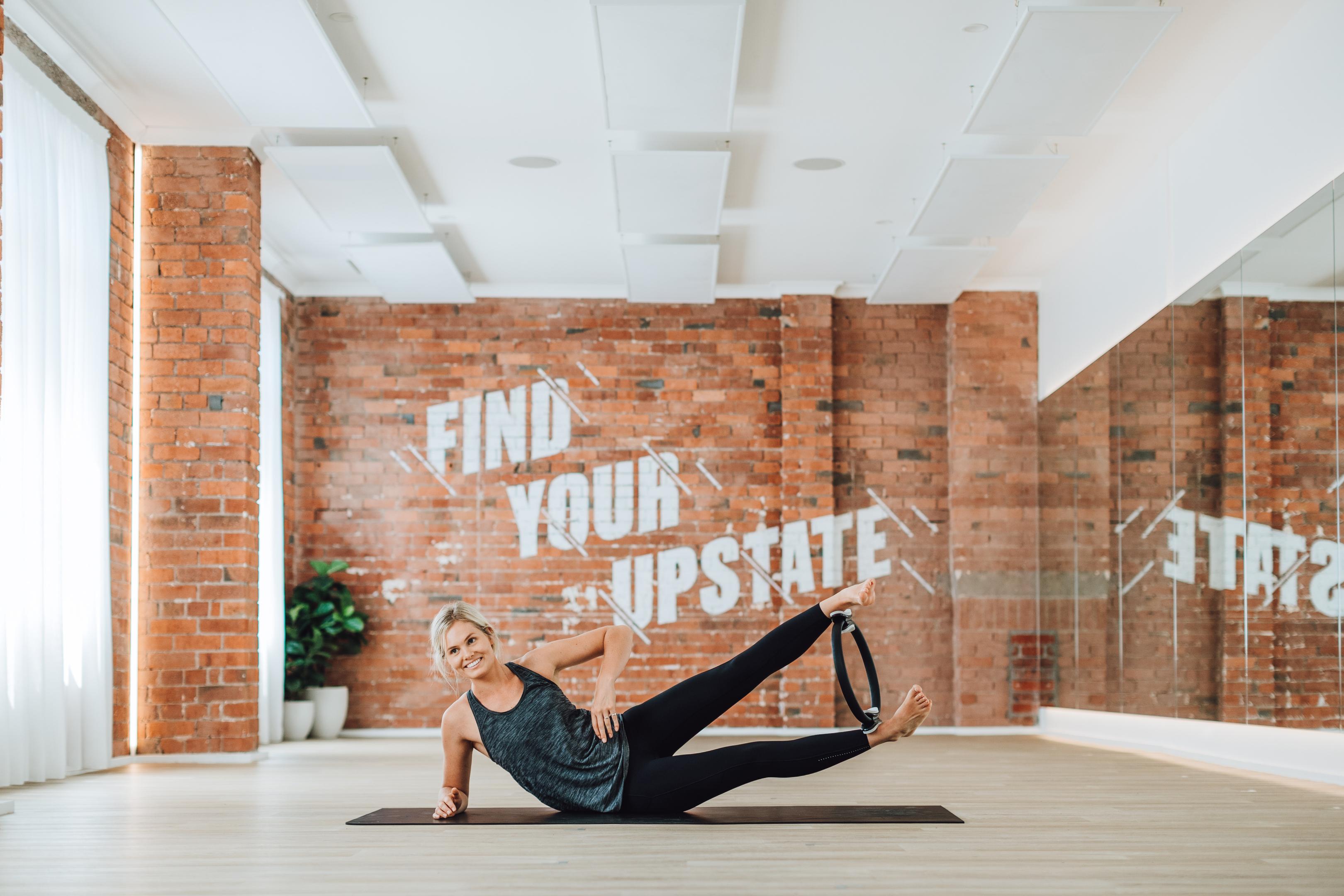
At Upstate, we offer different mat-based classes depending on the experience you’re looking for, and some Mat Pilates sessions may also use small props such as a pilates ring, also known as a magic circle.
Hot Pilates takes traditional Pilates movements and turns up the intensity with our infrared-heated studios. The warmth helps increase the challenge, improve mobility, and create a powerful full-body workout that leaves you feeling strong, sweaty, and accomplished.
For a slower, more restorative experience, Yin Yoga focuses on deep stretching, longer holds, breathwork, and relaxation. Perfect for balancing out more intense training or taking time to slow down.
Whether you want to strengthen, sweat, stretch, or reset, Upstate’s mat-based classes are designed to help you move better and feel your best.
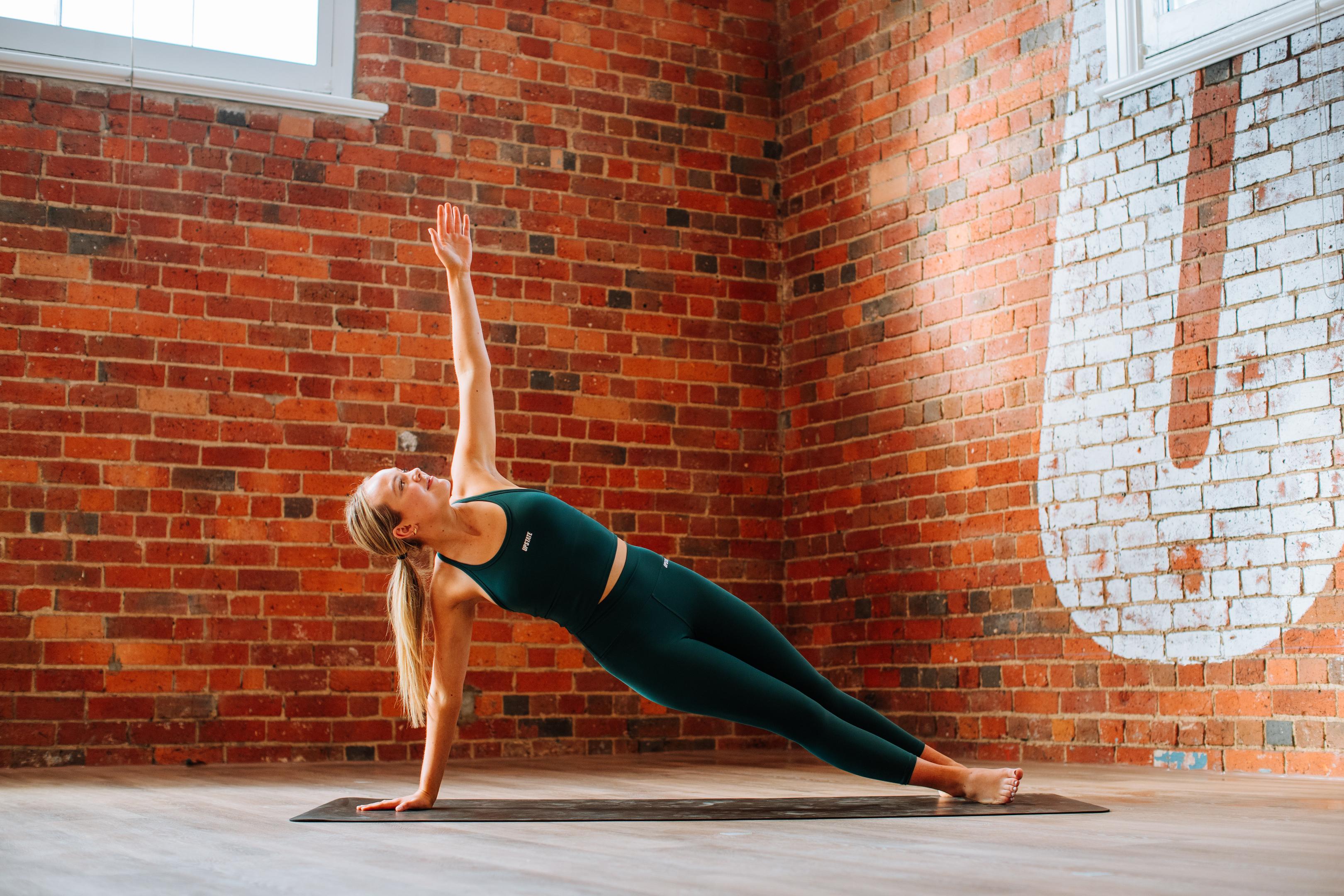
5 Mat Pilates Exercises Every Beginner Should Know
Before your first Mat Pilates class, it can be helpful to understand some of the foundational movements you may come across. While Pilates exercises can look simple, the magic is in the control, breathing, and technique behind each movement. At Upstate, your instructor will guide you through every exercise, offering modifications and helping you understand what each movement should feel like.
The Hundred
The Hundred is a classic Pilates exercise where you lie on your back, lift your legs into position, and pump your arms while maintaining a strong core connection. It targets your deep abdominals, improves breathing control, and builds endurance through your core and upper body.
Technique cue: Keep your ribs connected and focus on breathing steadily rather than rushing the arm movements.
What you should feel: A deep burn through your core, not tension in your neck or shoulders.
Beginner modification: Keep your feet on the mat or bend your knees to reduce the intensity while building core strength.
Double Leg Stretch
The Double Leg Stretch involves extending your arms and legs away from your centre before drawing everything back in with control. This movement challenges your core stability, coordination, and ability to maintain control while your arms and legs are moving.
Technique cue: Think about reaching long through your arms and legs while keeping your core switched on.
What you should feel: Your lower abs working to keep your body stable, not your lower back arching away from the floor.
Beginner modification: Keep your legs higher or practise moving your arms only until you feel more confident.
Articulating Bridge
The Articulating Bridge involves lifting your hips while slowly rolling your spine away from the mat one vertebra at a time. It strengthens your glutes, hamstrings, and core while improving spinal mobility and control.
Technique cue: Imagine peeling your spine off the floor slowly rather than simply lifting your hips.
What you should feel: Your glutes and hamstrings doing the work, not your lower back taking over.
Beginner modification: Lift only as high as feels comfortable and focus on smooth, controlled movement.
Leg Circles
Single Leg Circles involve lying on your back and moving one leg through controlled circular movements; as one of the original exercises in the mat sequence, this classical variation is often the first version beginners learn. This exercise targets your core stability, hip mobility, and the muscles around your hips and thighs.
Technique cue: Keep your hips heavy and stable while your legs create the movement. What you should feel: Your core controlling the movement, not your pelvis rocking from side to side. Beginner modification: Make the circles smaller or keep one foot on the mat for extra support.
Plank
The Pilates plank is a full-body strengthening movement and a challenging workout because you’re supporting and stabilising your body without machine assistance, challenging your core, shoulders, arms, and legs while teaching you how to create stability through your entire body.
Technique cue: Think about creating one long line from your head to your heels rather than simply holding yourself up. What you should feel: Your core, shoulders, and legs working together, not pressure only through your wrists. Beginner modification: Drop your knees to the mat while maintaining a strong, straight posture through your spine.
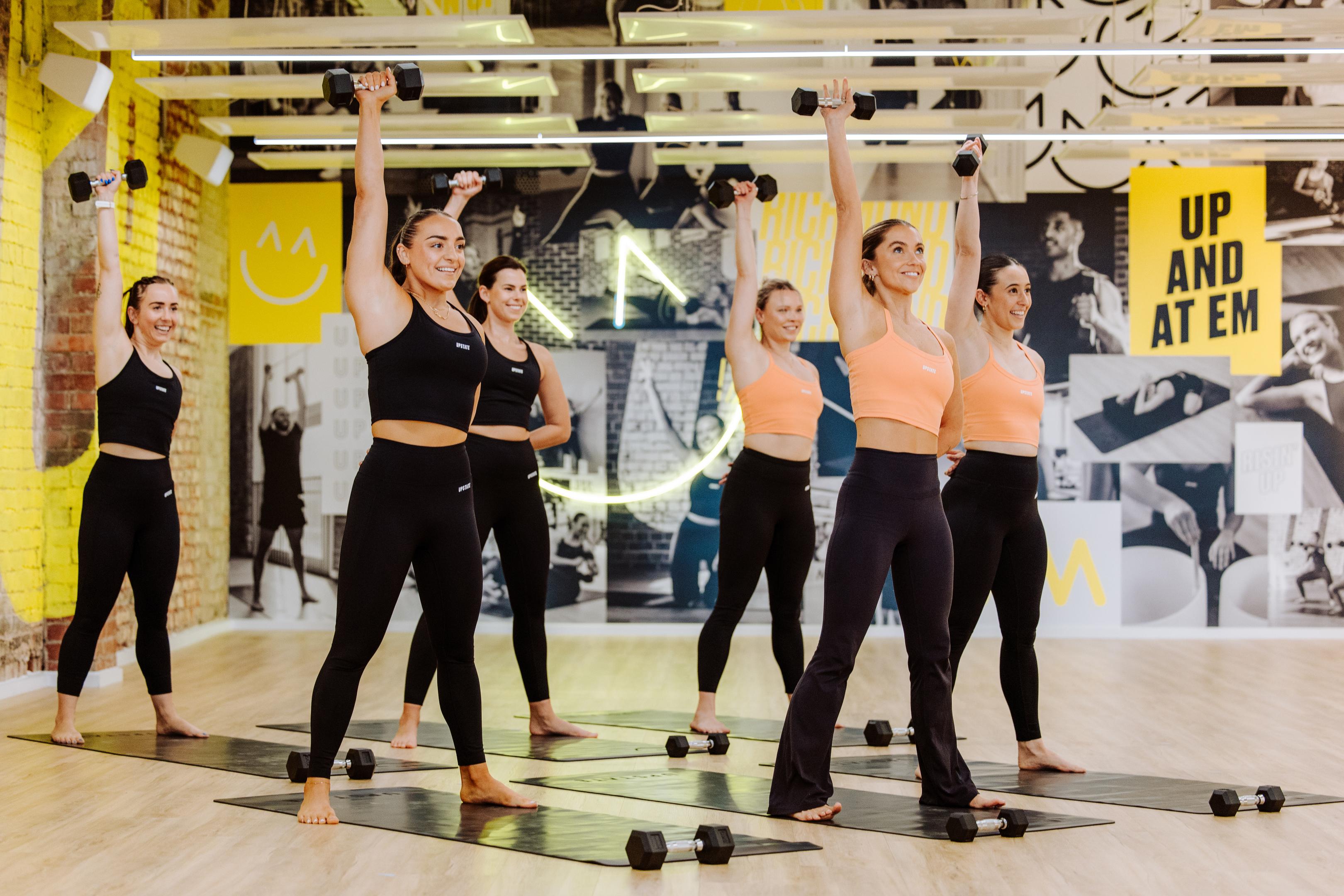
Tips for Your First Mat Pilates Class
Walking into your first Mat Pilates class can feel a little intimidating, but remember, everyone starts somewhere. We recommend arriving a few minutes early so you can introduce yourself to your instructor and let them know it’s your first class. This gives your instructor the chance to guide you through what to expect and offer any helpful tips before you begin.
Wear comfortable, form-fitting activewear that allows your instructor to see your alignment and provide technique cues. Pilates teachers often recommend sticky socks for safety during class. Don’t worry about keeping pace with everyone else. Pilates is about control, not speed. Your goal in your first class isn’t to be perfect; it’s to learn the movements, connect with your body, and build confidence.
One of the most common beginner mistakes is holding your breath when an exercise feels challenging. Focus on steady breathing throughout class; your breath helps you engage your core, stay relaxed, and move with more control. And don’t be surprised if you feel muscles you didn’t even know existed for the next 24–48 hours after your first session!
Unlike following a workout at home, Upstate instructors are there to support you every step of the way. Our instructors are trained to provide clear guidance, offer modifications, and check in with new members throughout class so you feel comfortable and confident from your first session. If you’re wondering about gear, Upstate provides mats, and a Pilates mat is thicker and more cushioned than a standard yoga mat.
Whether you’re joining us for Hot Pilates or exploring other movement styles, you’ll always be welcomed into a supportive community where everyone is encouraged to move at their own pace.
How Often Should You Do Mat Pilates?
For most beginners, 2–3 Mat Pilates classes per week is the sweet spot. This gives your body enough consistency to build strength, improve technique, and develop movement confidence without overwhelming your muscles as they adapt to something new.
When you’re starting Pilates, you’re not just building physical strength; you’re also teaching your brain and body how to move with more control. Pilates involves learning new movement patterns, understanding alignment, and building awareness of which muscles should be working. This is why consistency matters more than doing as many classes as possible. Showing up regularly each week helps those movements become more natural over time.
A common beginner mistake is trying to do a class every day straight away. While motivation is great, too much too soon can lead to excessive soreness and make it harder to enjoy the process. Giving your body time to recover between sessions helps you return stronger and more confident.
At Upstate Studios, our 45-minute Mat Pilates and Hot Pilates classes make it easy to build Pilates into your weekly routine. Whether you join before work, during your lunch break, or after hours, 2–3 classes per week are a realistic and effective way to start feeling stronger, more mobile, and more connected to your body.
Ready to Try Mat Pilates at Upstate?
Ready to experience Pilates for yourself? Start your Upstate journey with our 30 Day Unlimited Intro Offer for just $59, book a class today, and explore a range of classes designed to help you move, sweat, strengthen, and feel your best. Try different class styles and find what works best for your body and goals.
FAQs
What is Mat Pilates?
Mat Pilates is a floor-based workout that uses controlled movements, bodyweight, and breathwork to build strength, improve flexibility, and increase body awareness.
Is Mat Pilates the same as regular Pilates?
Yes. Mat Pilates is one style of Pilates, based on Joseph Pilates’ original method, with mat work as the original floor-based format. The main difference is that it is performed on a mat rather than using equipment like a reformer, and mat exercises form the foundation of this style.
What is the difference between Mat Pilates and Reformer Pilates?
Mat Pilates uses your bodyweight as resistance, while Reformer Pilates uses springs, straps, and a moving carriage to support and challenge your movements.
What is the difference between Mat Pilates and yoga?
Both use controlled movement and breathwork, but Pilates focuses more on core strength, stability, and controlled exercises, while yoga places more emphasis on flexibility, mindfulness, and longer holds.
Is Mat Pilates good for beginners?
Yes. Mat Pilates is beginner-friendly and every exercise can be modified to suit your fitness level, strength, and experience.
What should I feel during Mat Pilates? Is discomfort or pain normal?
You should feel your muscles working and being challenged, but Pilates should never cause sharp pain. Always let your instructor know if something doesn’t feel right.
What do I need for Mat Pilates?
Just comfortable activewear, water, and yourself! A mat is provided at Upstate, and we recommend bringing a towel and water bottle for Hot Pilates classes. No machine is needed, though some classes may use small props, and your own body weight provides the resistance. Many benefits come from a regular Pilates practice, not from gear.