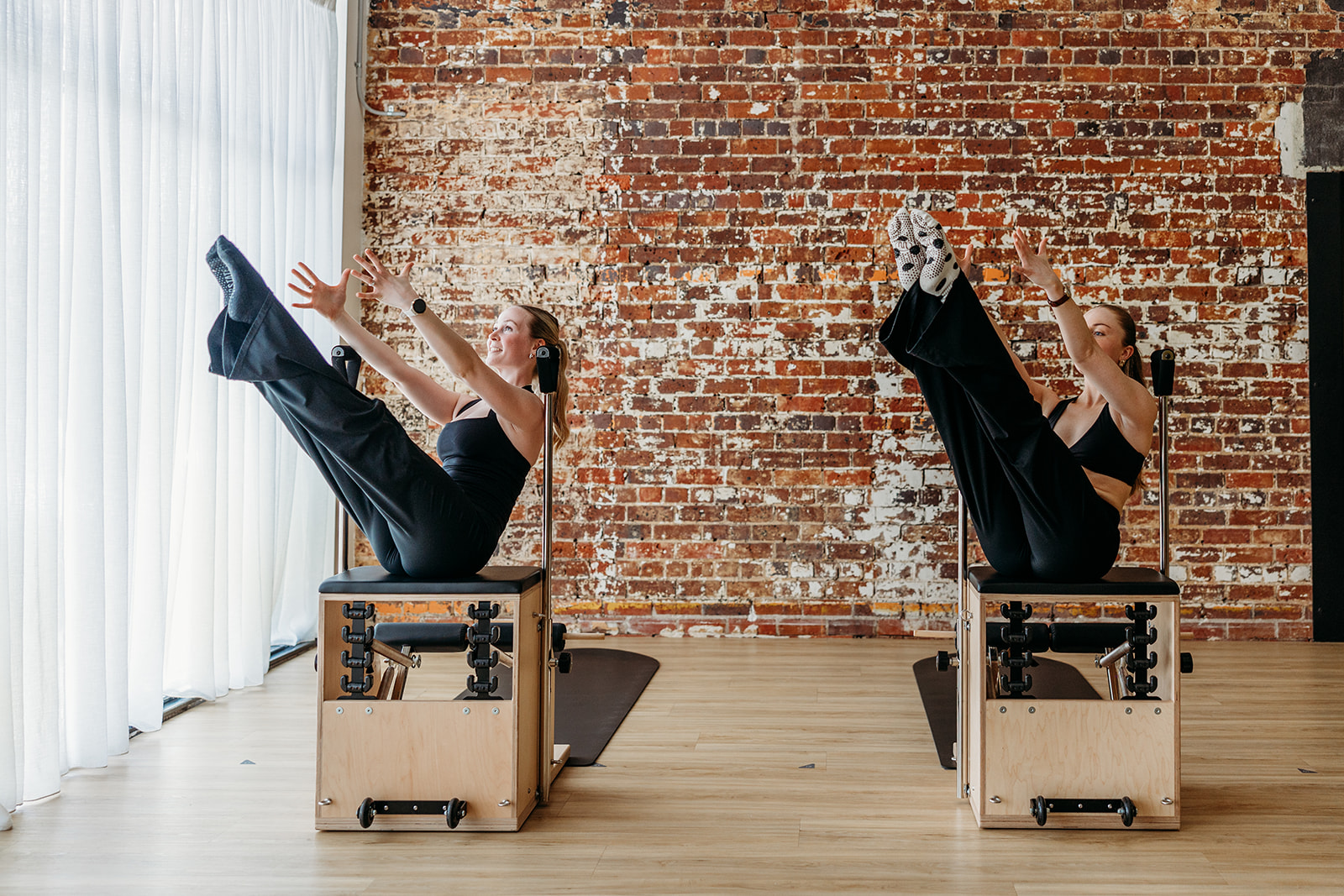
You’ve done Reformer Pilates. You’ve tried Mat Pilates. Now there’s a new way to move at Upstate: Chair Pilates.
And while the Pilates Chair might look simple, don’t let its size fool you. This compact piece of Pilates equipment can create a seriously challenging full-body workout.
The Pilates Chair itself isn’t new. Joseph Pilates developed and patented the Wunda Chair in the early 1930s as a piece of equipment designed to support strength, control and functional movement.
What’s new? Putting 18 of them in one room, turning up the music and making it an Upstate class.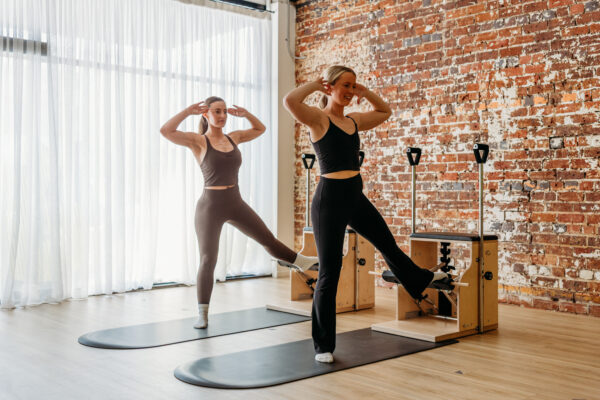
So, what exactly is Chair Pilates?
Chair Pilates uses a specialised spring-loaded Pilates Chair to create resistance throughout your workout.
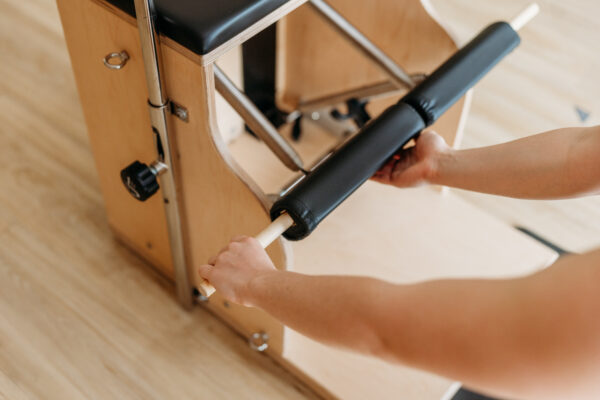
Unlike some forms of “Chair Pilates” you might see online, which use a standard household chair for seated exercises, Upstate Chair Pilates uses dedicated Pilates equipment featuring a padded platform, spring resistance and a pedal.
This gives you plenty of ways to move.
Expect a combination of vertical Chair work, mat exercises and weighted props, all designed to challenge your strength, stability, balance and control.
And yes, you’ll still feel that classic Pilates focus on controlled movement and core engagement. But with the Chair, you’ll also spend more time working vertically, challenging your body from different positions and using resistance in new ways.
What can you expect from an Upstate Chair Pilates class?
45 minutes. Full-body movement. A whole new challenge.
Your class will move between the Chair and mat, incorporating weighted props and different spring settings to create a dynamic full-body workout.
- Vertical movement: The Chair allows you to work from seated, kneeling and standing positions, giving you a different movement experience to the Reformer.
- Full-body strength: Chair Pilates isn’t just about your core. You’ll work your upper body, lower body and everything in between, with resistance and bodyweight exercises throughout the class.
- Core, balance & control: The Chair creates plenty of opportunities to challenge your stability and control. You’ll need to stay connected through your core as you move, balance and transition between exercises.
- Weighted props: Expect some added equipment throughout class to challenge your strength and bring another layer to your workout.
- Options for every level: Every exercise comes with options, so you can adjust the movement and spring resistance to suit where you’re at.
Whether you’re completely new to Pilates or you’ve been doing Reformer for years, you can work at your own level and build from there.
Chair Pilates vs. Reformer Pilates
So, what’s the difference between Chair Pilates and Reformer Pilates? Both use spring-based resistance and Pilates principles to challenge strength, control and stability. But the equipment and movement experience are different.
Chair Pilates | Reformer Pilates | |
Equipment | Compact Pilates Chair with springs and a pedal | Moving carriage with springs, straps, ropes and footbar |
Movement | More vertical movement, including seated, kneeling and standing exercises | More movement on and around the carriage |
Resistance | Spring-loaded pedal and bodyweight resistance | Springs connected to the moving carriage |
Workout style | Dynamic, strength-focused and vertical | Controlled, flowing and resistance-based |
Core work | Challenged through stability, balance and controlled movement | Challenged through carriage movement and stabilisation |
Upper body | Bodyweight, springs and weighted props | Straps, springs, bodyweight and props |
Lower body | Chair springs, bodyweight and weighted exercises | Footbar, carriage and spring resistance |
Props | Mat + weighted props | Reformer + optional props |
Best for | Anyone wanting a new full-body strength challenge | Anyone wanting a versatile Pilates workout using the carriage |
Experience | A different way to challenge strength, balance and control | A classic Pilates experience with the moving carriage |
So which one should you try?
There isn’t a right or wrong choice. Chair and Reformer simply give you different ways to move.
If you love Reformer, Chair Pilates is a great way to mix up your routine and challenge your body with different movement patterns.
If you’re new to Pilates, Chair Pilates offers another accessible starting point, with exercise and spring options throughout class to help you find your level.
And if you already love both? Even better. Your body gets to experience a little more variety.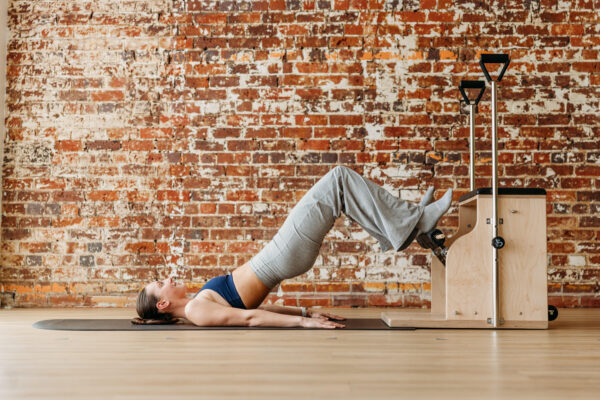
What are the benefits of Chair Pilates?
Chair Pilates brings together many of the principles people love about Pilates: controlled movement, resistance, core engagement, balance and stability.
Because the Chair allows for vertical as well as seated and kneeling movement, it can also challenge your body in ways that feel different to a traditional Mat or Reformer class.
You can expect to work on:
- Strength: Build full-body strength through resistance, bodyweight and weighted exercises.
- Core control: Challenge your core as you stabilise, balance and move through different positions.
- Stability & balance: The Chair creates opportunities to work on control and stability while moving through different planes of movement.
- Upper-body strength: Expect plenty of opportunities to challenge your shoulders, arms and upper body.
- Movement variety: Switching between the Chair and mat keeps your workout dynamic and gives you new ways to move.
Most importantly, Chair Pilates is designed to be challenging without being intimidating. You can adjust the resistance and use movement options to make the workout work for you.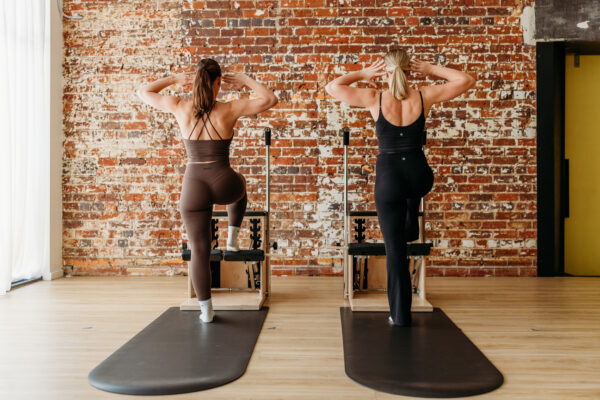
Is Chair Pilates the same as Chair Pilates you see online?
Not necessarily! The term “Chair Pilates” can describe different types of workouts.
You might have seen videos online using a regular household chair for seated Pilates exercises.
These classes can be a great way to introduce movement and Pilates principles without specialised equipment.
At Upstate, however, Chair Pilates refers to our equipment-based class using dedicated Pilates Chairs. That means you’re getting the resistance, spring work and movement possibilities of a purpose-built Pilates apparatus, combined with the energy of a group Upstate class.
What should I bring?
Getting ready for Chair Pilates is easy.
Grip socks: Recommended, but not required.
Mats: Provided by Upstate.
Yourself: Come ready to move, sweat and try something new.
If it’s your first Chair Pilates class, arrive a little early so your instructor can introduce you to the equipment and help you get set up.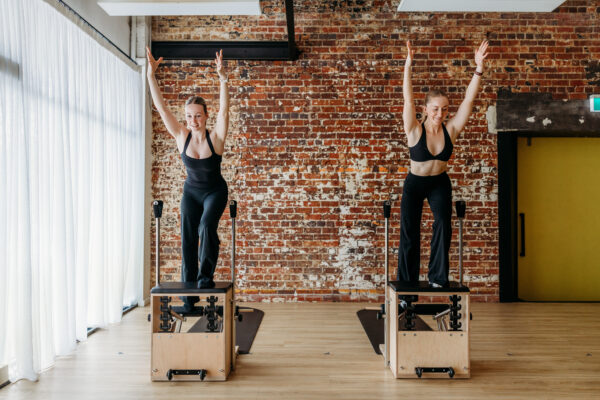
Ready to take a seat?
The Chair might be compact, but the workout is anything but.
Expect 45 minutes of vertical movement, mat work, weighted props and full-body strength work designed to challenge your core, upper body, stability and control.
New to Pilates? You’re welcome.
A Reformer regular? Come and mix things up.
Ready for a new challenge? This one’s for you.
18 Chairs. 45 minutes. One very Upstate way to move.
Discover Chair Pilates at Upstate Studios and book your first classs now.